A generation ago, you replaced a kitchen dishwasher when the finish went out of style, not when it broke. Ten to fifteen years of service was the assumption, and the repair guy showed up for a leaky door gasket or a worn pump seal. Now people are burying dishwashers at six or seven, watching ice makers seize at four, and pulling clogged aerators off the faucet every few months.
The equipment isn’t the problem. The water it runs on has gotten harder in more households, and the tolerances inside modern appliances have gotten tighter. That combination drains money out of kitchens every month. Before you replace another appliance, figure out what’s eating them.
What Is Hard Water, Exactly?
Hard water carries dissolved calcium and magnesium picked up as it moves through rock and soil. The USGS defines the standard scale in milligrams per liter of calcium carbonate: soft at 0–60, moderately hard at 61–120, hard at 121–180, and very hard above 180. Grains per gallon is the other common unit; divide mg/L by about 17 to convert.
The minerals themselves are harmless to drink. The trouble starts when the water heats up, evaporates, or sits still. They come out of solution and stick to whatever surface they were touching. That deposit is scale, and scale is what shortens appliance life.
Why Is a Six-Year-Old Dishwasher Dying?
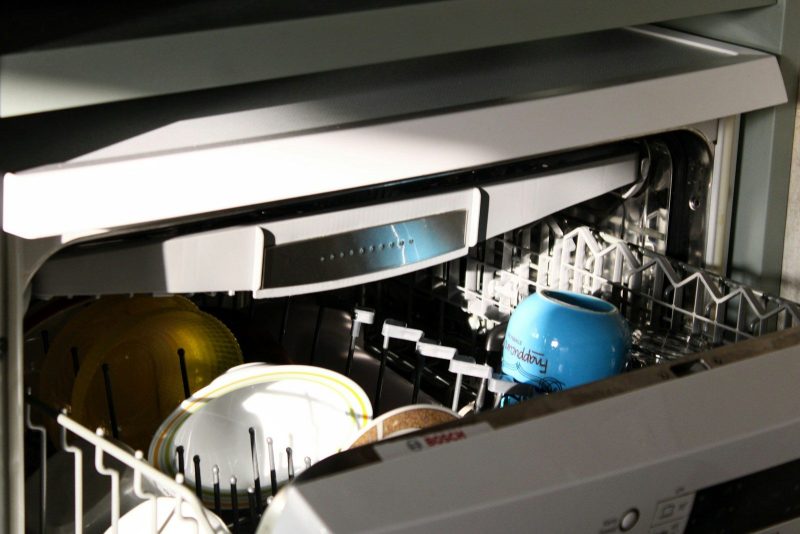
A dishwasher is a small, hot, wet box full of narrow passages. Water enters through a fill valve, gets heated, sprays through tiny nozzles in the spray arms, drains through a pump, and cycles again. Every one of those steps is a place scale can build.
You’ll usually see the symptoms before the failure. Spots and film on glassware, cloudy interior walls, and dishes coming out gritty on the top rack because the upper spray arm isn’t spinning freely. Cycle times stretch out as the heating element works around a layer of insulation it wasn’t designed to have.
Then a control board throws an error, or the pump stops, and a technician quotes a repair that costs more than half of a new unit. None of that is a manufacturing defect. It’s the water attacking the machine in slow motion. A local water treatment specialist can test the supply, size softening equipment to the household, and set it up so the appliances stop drinking mineral-loaded water.
Which Appliances Take the Worst Hit?
Anything that heats water or pushes it through a small opening is on the front line. In a typical kitchen, that’s a short list, and the damage isn’t spread evenly.
- Water heater. Scale settles on the tank bottom and coats the heating element or wraps the burner tubes. A Battelle study commissioned by the Water Quality Research Foundation found hard water can cause up to a 48% efficiency loss in storage water heaters, and tankless units in the same testing failed in under two years on very hard water.
- Dishwasher. Spray-arm nozzles clog, heating elements insulate over, and door seals harden as mineral film accumulates on the rubber.
- Ice maker and refrigerator dispenser. The fill tube, solenoid valve, and mold are all narrow, cold, and unforgiving. Scale plus food-grade sanitizer residue is a fast killer of ice production.
- Coffee maker and kettle. These are the canaries. If your drip machine is scaling up in a year, everything else in the kitchen is scaling up at the same rate. You just can’t see it yet.
- Faucet aerators and sprayer heads. Not appliances, technically, but the first place a homeowner notices the water is fighting the fixtures.
How Do You Know What You’re Dealing With?
Start with a real number, not a guess. A basic test strip from a hardware store will put you in the right ballpark in about thirty seconds. Municipal water utilities publish an annual water quality report that lists hardness, so check that too. The two numbers together tell you whether your softener, if you have one, is doing its job.
If your reading lands in the hard or very hard range, the fix isn’t a stronger detergent or a fancier rinse aid. You have to treat the water before it reaches the appliance. That usually means a whole-house softener sized to the household’s flow rate and hardness level, sometimes paired with a sediment filter or a point-of-use reverse osmosis system at the kitchen sink for drinking water.
Is Treating the Water Worth It?
Run the numbers on your own kitchen. Add up the last water heater, the dishwasher that didn’t make it to eight, the ice maker service call, and the descaling tablets you buy for the coffee machine. Compare that to the installed cost of softening equipment and the salt or potassium you’ll feed it each year.
For most households with genuinely hard water, the math works out in a few years and keeps working after that. Appliances last closer to what the manufacturer originally promised. The energy bill flattens, the glassware stops looking foggy, and the next dishwasher gets to die of old age, not of the water it was drinking.