
Key Takeaways
- Offering retirement plans enhances employee retention and satisfaction.
- Financial wellness programs can alleviate employee stress and boost productivity.
- Providing comprehensive health insurance contributes to overall financial security.
- Educating employees on financial literacy empowers them to make informed decisions.
Ensuring the financial well-being of employees is becoming an increasingly strategic priority for small businesses. In today’s competitive landscape, financial security is not just a benefit—it’s a crucial factor for attracting and retaining top talent. Taking deliberate steps to foster financial resilience can lead to a supportive work environment and sustainable business growth. By introducing practical solutions, companies empower their workforce to feel more secure, satisfied, and motivated to perform at their best. For those seeking actionable strategies, small business 401(k) insights from ADP provide valuable guidance on how to start building these financial foundations.
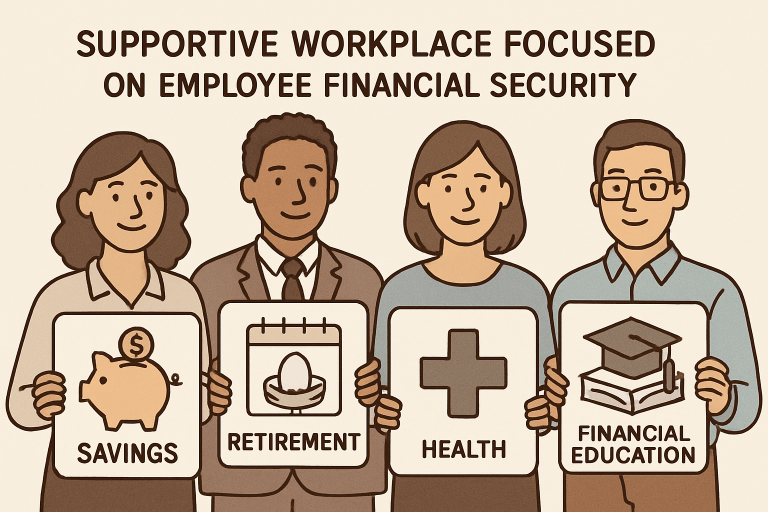
From retirement plans to financial wellness programs, a comprehensive approach ensures that employees have the necessary resources to navigate financial challenges. Comprehensive health benefits and financial education initiatives enhance this security, empowering staff to make more informed choices about their futures. As financial pressures intensify, prioritizing these steps also helps alleviate workplace stress, ultimately contributing to a more engaged and stable workforce.
Beyond competitive salaries, small businesses that actively support employee financial wellness are shown to experience lower turnover rates and higher productivity. Employees who feel financially secure are better able to focus on their work and less likely to seek job opportunities elsewhere. This proactive focus on financial security sets businesses apart, fostering loyalty and long-term organizational success.
Implementing Retirement Plans
Introducing a retirement plan remains one of the most effective ways for small businesses to enhance employee financial security. The Secure Act 2.0, passed in late 2022, simplifies offering retirement options—a move that has become critical as employees seek jobs that support long-term stability. This legislation provides significant tax credits, including coverage of up to 100% of the startup costs for small business retirement plans and incentives for automatic enrollment. For a detailed overview of how small firms can leverage these new rules, resources from The New York Times help explain what’s changed and why it matters. Harnessing these incentives, businesses can join Multiple Employer Plans to reduce administrative expenses and set themselves apart when hiring new talent.
Introducing Financial Wellness Programs
Financial wellness programs dive deeper than merely offering paychecks—they equip staff with tools for budgeting, debt reduction, and long-term savings. The Employee Benefit Research Institute notes that while many small businesses lack these programs, those that do are often more comprehensive than their larger counterparts. Effective wellness initiatives—such as one-on-one financial counseling and workshops on credit management—support both stability and mental health. When implemented, these programs contribute to reduced financial stress at work, increased morale, and improved business performance.
Providing Comprehensive Health Insurance
Medical expenses can quickly undermine anyone’s financial security. To protect employees, small businesses should consider health plans that extend beyond basic medical coverage to include dental, vision, and preventive care. A thoughtful approach demonstrates commitment to staff well-being and helps prevent financial crises triggered by unexpected health costs. According to Forbes, companies lose billions of dollars annually due to wage losses and reduced productivity associated with medical issues. This risk can be significantly reduced by offering high-quality insurance options.
Educating Employees on Financial Literacy
Advanced financial education is another core element of building an engaged and secure workforce. Resources dedicated to teaching budgeting, investing, and retirement planning provide employees with the confidence to navigate major life decisions and avoid pitfalls such as high-interest debt or insufficient savings. While a majority of small business owners rate themselves high in financial literacy, studies show that gaps persist—leading to real fiscal challenges across various industries. Ongoing learning opportunities, whether through digital courses or in-person seminars, close these gaps and lay the foundation for a financially resilient team.
Encouraging Emergency Savings
Building an emergency fund is non-negotiable for both business stability and employee peace of mind. Employers can encourage staff to save by facilitating payroll deductions into personal accounts and providing access to financial planners. Industry best practices recommend setting aside at least three to six months’ worth of living expenses or operating costs to weather unexpected disruptions. In times of crisis, a well-padded emergency fund can be the difference between recovery and lasting hardship.
Assisting with Debt Management
Debt is a leading cause of employee financial anxiety, affecting everything from job performance to overall health. Small businesses can assist by giving access to credit counseling, debt consolidation workshops, or partnerships with financial coaching services. By addressing debt directly, employers empower their staff to reduce financial burdens and focus fully on their work.
Offering Flexible Benefits
Flexibility is key in today’s benefits landscape. Flexible spending accounts, health savings accounts, and voluntary protections—such as life or disability insurance—give employees the autonomy to customize their benefit packages for their unique circumstances. Empowered workers appreciate and remember this flexibility, leading to greater job satisfaction and loyalty.
Leveraging Technology for Financial Management
Adopting modern payroll and benefits technology streamlines financial processes for all parties. Tools that offer direct deposit, mobile pay stubs, and integration with savings or investment platforms let employees manage their finances on their own terms. Additionally, access to financial wellness apps can enhance engagement and promote effective daily money management, leading to tangible improvements in long-term financial health.
Ultimately, companies that prioritize employee financial security don’t just enhance individual outcomes—they lay the groundwork for lasting business success. By deploying a holistic mix of benefits, education, and technology, small businesses can cultivate a loyal, productive, and resilient workforce for years to come.
Final Thoughts
Prioritizing employee financial well-being is no longer optional—it’s a strategic imperative for small businesses seeking to attract, retain, and engage top talent. By implementing retirement plans, financial wellness programs, comprehensive health coverage, and educational initiatives, companies provide staff with the tools and confidence to make informed financial decisions. Supporting emergency savings, debt management, and flexible benefits further strengthens this foundation, while leveraging modern technology simplifies access and engagement. Ultimately, businesses that invest in the holistic financial security of their workforce foster loyalty, reduce turnover, and create a more productive, resilient organization—building a win-win scenario for both employees and employers.