Quick Summary: Getting Started with Futures Trading
Learning how to trade futures opens the door to one of the most liquid, transparent, and dynamic financial markets in the world. Whether you want to speculate on the S&P 500, gold, or crude oil, futures trading offers significant leverage and round-the-clock market access.
- The Basics: Futures are standardised contracts to buy or sell an asset at a predetermined price on a specific date in the future.
- The Advantage: You can trade nearly 24 hours a day, 5 days a week, and profit from both rising and falling markets.
- The Tools: Success requires moving beyond traditional candlestick charts. Understanding market depth and liquidity through platforms like Bookmap is critical for identifying institutional activity.
- The First Step: Beginners should start by paper trading Micro E-mini contracts to understand leverage and margin before risking live capital.
What is Futures Trading?
Futures trading involves the buying and selling of derivative financial contracts on a regulated exchange, such as the CME Group. Unlike purchasing traditional shares where you own a piece of a company, trading a futures contract means you are agreeing to exchange a specific underlying asset at an agreed-upon price at a future expiration date.
Modern futures trading is predominantly cash-settled for retail traders. This means you do not need to take physical delivery of barrels of oil or bushels of wheat. Instead, the difference between your entry price and the settlement price is credited to or debited from your brokerage account in cash.
How Do Futures Contracts Work?
Every futures contract is highly standardised by the exchange to ensure maximum liquidity. This standardisation defines:
- The Underlying Asset: What the contract represents (e.g., S&P 500 Index, Nasdaq 100, Gold).
- Contract Size: The specific multiplier used to calculate the value of the contract.
- Tick Size: The minimum allowable price fluctuation.
- Expiration Date: The specific month and day the contract expires and settles.
Because the terms are identical for all participants, traders can easily enter and exit positions (offsetting) without needing to hold the contract until expiration.
How Do You Trade Futures Step by Step?
Transitioning from a complete beginner to an active futures trader requires a structured approach. Here are the essential steps to begin your journey:
- Educate Yourself on Market Mechanics: Understand tick values, point values, and the expiration cycles of the specific contracts you wish to trade.
- Select a Regulated Futures Broker: Choose a broker regulated by the CFTC and NFA (or your local equivalent) that offers low commissions and low day-trading margins.
- Choose a Professional Trading Platform: Select an advanced charting and execution platform. While basic charts show past prices, connecting your broker to Bookmap allows you to see the live order book and resting liquidity.
- Subscribe to Real-Time Market Data: Futures exchanges charge a monthly fee for live data. You will need a Level 2 (Market Depth) data feed, such as Rithmic or dxFeed, to view the full order book.
- Practise with Paper Trading: Spend several weeks trading in a simulated environment using live data. This helps you master order entry (limit, market, stop orders) without financial risk.
- Develop a Trading Plan: Define your entry signals, exit strategies, and daily risk limits.
- Fund Your Account and Trade Live: Start with the smallest available contract sizes (Micro futures) to ease the psychological transition into trading real capital.
How Does Futures Margin Work?
Unlike stock trading, where margin represents borrowed money that incurs interest, futures margin acts as a good-faith deposit or performance bond. It is a fraction of the contract’s total nominal value that you must hold in your account to open and maintain a position.
There are two primary types of margin:
- Initial Margin (Overnight Margin): Set directly by the exchange (e.g., CME Group), this is the capital required to hold a futures contract overnight past the daily market close.
- Day Trading Margin: Set by your individual broker, this is a significantly reduced capital requirement for opening and closing trades within the same trading session.
Because margin requirements are small relative to the contract’s total value, futures trading inherently involves high leverage.
How Much Money Do You Need to Trade Futures?
While some discount brokers offer day trading margins as low as $50 for Micro E-mini contracts, funding an account with the absolute minimum is incredibly risky. A minor market fluctuation can trigger an immediate margin call or auto-liquidation.
To trade safely, professionals recommend maintaining an account balance of at least $1,500 to $2,500 when trading Micro contracts, and $10,000 to $15,000 when trading standard E-mini contracts. This provides an adequate buffer for drawdowns and allows for proper risk management.
What are Micro and E-mini Futures?
The CME Group offers different contract sizes to accommodate both institutional funds and retail traders.
| Contract Type | Ticker Symbol | Multiplier | Tick Size | Tick Value |
|---|---|---|---|---|
| E-mini S&P 500 | ES | $50 x Index | 0.25 | $12.50 |
| Micro E-mini S&P 500 | MES | $5 x Index | 0.25 | $1.25 |
| E-mini Nasdaq 100 | NQ | $20 x Index | 0.25 | $5.00 |
| Micro E-mini Nasdaq 100 | MNQ | $2 x Index | 0.25 | $0.50 |
Micro futures are exactly one-tenth the size of their E-mini counterparts. They allow retail traders to participate in the same highly liquid markets with a fraction of the financial risk, making them the perfect training ground for beginners.
What are the Best Futures Markets for Beginners?
Beginners should focus on highly liquid markets that offer tight spreads and consistent daily volume.
- S&P 500 (ES / MES): The most popular equity index future globally. It respects technical levels well and offers immense liquidity, ensuring you can enter and exit trades instantly without slippage.
- Nasdaq 100 (NQ / MNQ): More volatile than the S&P 500, the Nasdaq moves faster and covers wider point ranges, appealing to traders who prefer higher momentum.
- 10-Year Treasury Notes (ZN): Ideal for traders who prefer a slower, more methodical market driven by macroeconomic data and interest rates.
What is the Best Futures Broker?
Your broker is responsible for holding your capital and routing your orders to the exchange. The best futures brokers offer low commissions, robust infrastructure, and seamless integrations with third-party software.
Top-tier options for retail traders include:
- Interactive Brokers: Excellent for international traders seeking access to global futures markets alongside equities and options.
- NinjaTrader Brokerage: Offers low day-trading margins and an integrated software ecosystem.
- Tradovate: A modern, cloud-based broker popular for its straightforward commission structures.
Regardless of which broker you choose, ensure they support API connections to advanced order flow platforms.
What is the Best Futures Trading Platform?
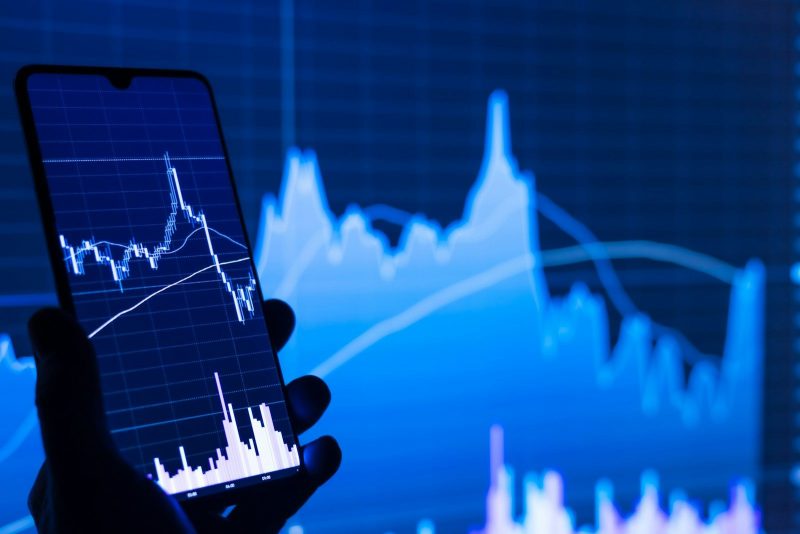
While your broker executes the trade, your trading platform is where you analyse the market and make decisions. Most basic platforms only display standard candlestick charts, which are inherently lagging indicators.
To gain an edge, professional traders use order flow and market depth platforms. Bookmap is widely regarded as the premier visual order flow platform. By rendering Market-by-Order (MBO) data into an interactive heatmap, it reveals the true intentions of the market, displaying limit orders, liquidity voids, and executed volume in real-time.
Can You Trade Futures with Bookmap?
Yes. You can trade futures directly from the Bookmap interface. By connecting your brokerage account and a supported data feed (such as Rithmic, CQG, or dxFeed), you can execute trades directly on the Bookmap heatmap. This allows for one-click order placement exactly where you see institutional liquidity resting.
[Get Started with Bookmap Today]
Why Choose Bookmap
When navigating the fast-paced futures market, trading blindly with lagging indicators puts you at a severe disadvantage. Here is why serious traders choose Bookmap:
- Unrivalled Market Transparency: See the full limit order book visualised as a high-definition heatmap. You can literally watch institutional liquidity move, build, or vanish.
- Identify Iceberg Orders: Large players hide their size using algorithmic iceberg orders. Bookmap’s advanced add-ons detect and display these hidden orders in real-time.
- Pinpoint Execution: Visualise exactly where market participants are trapped. By seeing cumulative volume delta (CVD) and order absorption, you can time your entries with millisecond precision.
- Speed and Accessibility: Bookmap connects seamlessly to over 20 different brokers and data providers, ensuring you have ultra-low latency access to the markets.
[Speak to an Expert About Bookmap]
What are the Best Futures Trading Strategies?
Success in futures trading relies on a defined strategy rather than intuition.
- Scalping: Capturing small price movements over seconds or minutes. Scalpers rely heavily on Level 2 data and order flow platforms to profit from minor liquidity imbalances.
- Swing Trading: Holding contracts for several days or weeks to capture larger macroeconomic trends. This requires a larger account balance to absorb overnight margin requirements.
- Order Flow Trading: Analysing the interaction between aggressive market orders and passive limit orders. Traders look for areas of “absorption” (where large buying is met by a wall of limit sell orders) to predict immediate price reversals.
How Do Professional Traders Use Order Flow?
Professionals do not rely solely on moving averages or RSI. They use order flow to find precise areas of supply and demand. By looking at a liquidity heatmap, a professional can see a massive cluster of limit orders resting at a specific price. They will use this visual data to set their profit targets just ahead of the liquidity wall, or place their stop losses safely behind it.
How Do You Manage Risk When Trading Futures?
Risk management is the mechanism that keeps you in the game. Without it, the leverage inherent in futures trading can drain your account rapidly.
- Always Use Stop Losses: Never enter a trade without a hard stop-loss order resting in the market. Protect your downside automatically.
- Strict Position Sizing: Never risk more than 1% to 2% of your total account equity on a single trade. If you have a $5,000 account, your maximum loss per trade should be capped at $50 to $100.
- Trade the Right Size: If your stop-loss distance requires you to risk $300 on an E-mini (ES) contract, but your risk limit is only $50, you must switch to the Micro E-mini (MES) contract to respect your risk parameters.
What are the Risks of Futures Trading?
The primary risk is leverage. Because you are controlling a large asset with a small margin deposit, a rapid price swing against your position can result in losses that exceed your initial margin deposit. If your account equity falls below the maintenance margin requirement, the broker will issue a margin call and automatically liquidate your position, often resulting in significant capital loss.
Trading Costs and Fees
Understanding your overhead costs is crucial, especially for day traders who execute multiple transactions per day. A futures trade typically involves four separate fees:
- Broker Commission: The fee your broker charges for facilitating the trade.
- Exchange Fee: Charged by the CME Group for matching the buyer and seller.
- NFA Fee: A tiny regulatory fee mandated by the National Futures Association.
- Routing Fee: A technology fee charged by the data routing provider (e.g., Rithmic or CQG).
While these fees are usually only a few dollars per side for standard contracts (and cents for Micro contracts), overtrading can cause fees to accumulate quickly, eroding your profit margins.
Trustpilot Reviews and Trader Feedback
When choosing trading tools, peer validation is vital. Platforms that provide genuine value to the trading community quickly build strong reputations.
Bookmap maintains an excellent standing among professional and retail traders alike, supported by glowing Trustpilot reviews. Traders consistently highlight how the liquidity heatmap completely transformed their understanding of price action. Many reviews note that before using order flow visualisation, they felt like they were guessing; after integration, they could finally see the “why” behind sudden market reversals and stop runs.
[Book a Consultation] to see how visualised order flow can refine your strategy.
Frequently Asked Questions
Can beginners trade futures?
Yes. With the introduction of Micro E-mini contracts, beginners can trade futures with significantly lower financial risk. However, comprehensive education, paper trading, and strict risk management are mandatory before trading with live capital.
Is futures trading profitable?
Futures trading can be highly profitable due to the leverage and liquidity available. However, profitability is never guaranteed. Consistent success requires a tested strategy, deep market understanding, emotional discipline, and the use of professional analytical tools.
What time do futures markets open?
Futures markets operate nearly 24 hours a day. For the CME Group equity indexes (like the S&P 500), the market opens on Sunday at 6:00 PM Eastern Time (ET) and trades continuously until Friday at 5:00 PM ET, with a brief daily maintenance pause from 5:00 PM to 6:00 PM ET.
Do I need to buy expensive software to trade futures?
While free basic charting software exists, competing against institutional algorithms requires an edge. Investing in advanced order flow software like Bookmap provides visibility into market depth that basic charts simply cannot offer.
Can I hold a futures contract forever?
No. Futures contracts have specific expiration dates. If you wish to maintain a position long-term, you must “roll over” your contract—closing the expiring contract and opening a new position in the subsequent month’s contract—before the expiration date arrives.