Industrial facilities are constantly looking for ways to improve efficiency, reduce downtime, and simplify complex system installations. One increasingly popular solution across many industries is the use of modular process skids. These systems offer a more streamlined and flexible approach to building and integrating industrial processes.
Rather than constructing every component of a process system directly on-site, modular skids allow major portions of the system to be pre-engineered, assembled, and tested before arriving at the facility. This approach can reduce installation time, improve quality control, and simplify future expansion or maintenance. As industrial operations continue prioritizing speed, scalability, and operational efficiency, modular process skids have become an important part of modern system design.
What a Modular Process Skid Is
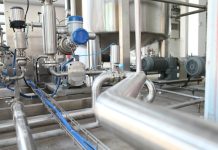
A modular process skid is a self-contained industrial processing unit built onto a structural frame or platform. The skid typically includes equipment such as pumps, valves, piping, instrumentation, control systems, filters, heat exchangers, or tanks assembled into a single integrated package.
Instead of installing each individual component separately at the facility, the skid arrives largely preassembled and ready for integration into the broader operation. The skid-mounted design allows the system to function as a modular unit that can often be transported, installed, and connected much more efficiently than traditional field-built systems. Because of their advantages, these systems are used across a wide range of industries, including food and beverage processing, pharmaceuticals, chemical manufacturing, water treatment, energy production, and industrial manufacturing.
Why Modular Systems Have Become More Popular
Traditional industrial construction projects can be time-consuming and logistically complicated. Building process systems entirely on-site often requires coordinating multiple contractors, managing extended construction timelines, and working around operational disruptions.
Modular process skids help simplify many of these challenges by shifting much of the fabrication and assembly work to a controlled manufacturing environment. Because the system is assembled off-site, installation at the facility tends to move faster. In many cases, the skid only requires utility connections, final integration, and startup testing after delivery. This approach can significantly reduce downtime and accelerate project completion timelines, which is especially valuable for facilities operating under tight production schedules.
Preassembly Improves Quality Control
One of the major advantages of modular process skids is the level of quality control possible during fabrication. Because the skid is assembled in a controlled manufacturing environment rather than an active industrial facility, technicians can often maintain more consistent fabrication standards. Welding, piping alignment, instrumentation installation, and electrical integration can all be completed under more predictable conditions.
Factory testing is another important benefit. Many skids are tested before shipment to verify system functionality, identify issues early, and reduce commissioning problems later. By resolving potential issues before the system reaches the customer’s facility, businesses can reduce startup delays and improve operational reliability.
Installation Becomes Faster and More Efficient
Traditional industrial system installations can require extensive on-site labor, coordination, and construction work. Modular process skids simplify this process substantially because much of the system already arrives assembled. This reduces the amount of field fabrication and installation required at the facility itself. In many cases, installation primarily involves positioning the skid, connecting utilities and piping, and integrating the control systems.
Shorter installation timelines help facilities minimize operational interruptions and reduce labor costs associated with lengthy construction projects. This becomes especially valuable in industries where downtime directly affects production capacity and revenue generation.
Flexibility and Scalability Are Major Advantages
Another reason modular skids have gained popularity is their flexibility. Because the systems are self-contained and standardized, facilities can often expand or modify operations more easily over time. Additional skids may be added to increase processing capacity or introduce new functionality without completely redesigning the entire facility infrastructure. This scalability supports phased growth strategies, allowing businesses to expand incrementally as operational needs evolve.
Transportation and Space Efficiency Matter
Modular skids are designed with transportation and installation logistics in mind. The skid frame provides structural support that allows the assembled system to be moved as a unit. This can simplify shipping and handling compared to transporting numerous individual components separately. Skids are also often designed to maximize space efficiency. Integrating equipment into a compact footprint can help facilities conserve valuable floor space and create more organized layouts.
Maintenance and Operational Benefits
Modular skid systems can also simplify maintenance and troubleshooting. Because the equipment is integrated into a clearly organized platform, technicians often have easier access to components for inspection, repairs, and routine servicing. Standardized layouts can also improve familiarity and simplify training for maintenance personnel. In some cases, skid-mounted systems can even be serviced or replaced more efficiently than fully integrated field-built systems.
Understanding Modular Process Skids
Modular process skids have become an increasingly valuable solution for industrial facilities seeking faster installation, improved quality control, and greater operational flexibility. As industrial operations continue prioritizing efficiency and adaptability, modular process skids are likely to remain an important part of modern process engineering and facility design.