
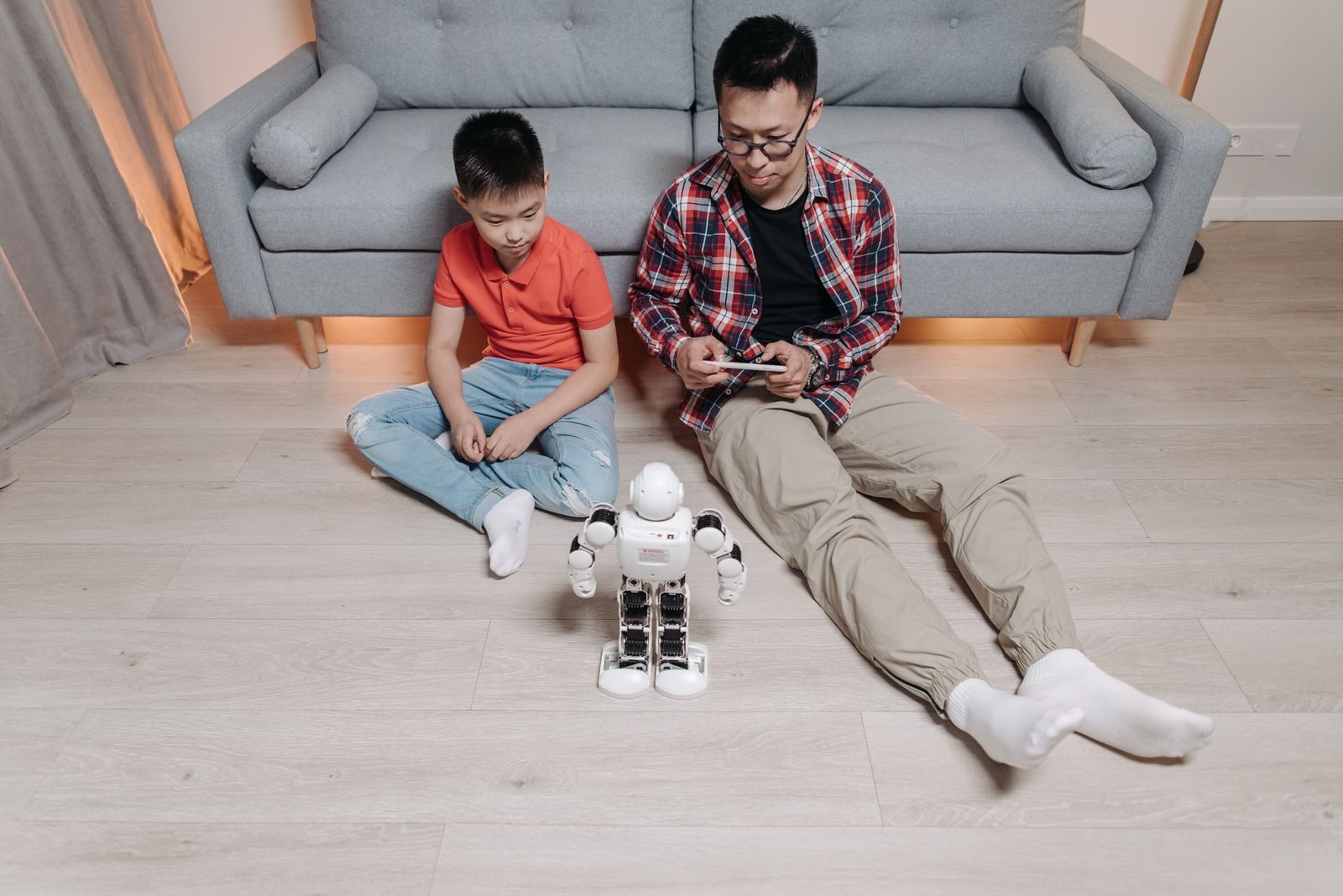
AI has gone mainstream in recent years and has progressed from something that academics researched to something that makes people’s lives easier without them even noticing. Embedded systems like virtual assistants, recommendation engines, and robo-tools within popular apps help people go about their daily lives. They have also set a new standard for convenience, quickness, and customization. From thereon out, as AI continues to get smarter, it starts to seep into more facets of our lives that influence how we learn, work, and think.
Why Artificial Intelligence Feels Invisible in Daily Use
The thing I find fascinating about artificial intelligence is how invisible it is in our tools. Many people use AI software daily without realizing it. They’re not looking for a bot to talk to or solicit input every time they need a answer. We’re making technology more human by hiding it.
If AI is running in the background making calculations and self-learning to enhance our experience without us giving it input, we suddenly have an easier time interacting with our tools. There’s less friction when completing tasks and nobody has to know we’re using sophisticated systems! It’s a win-win.
The less we know about or notice AI running our systems the more ingrained it becomes. Our technology is making decisions for us silently without us knowing. Buddha knows we should all be aware. Invisible intelligence is one of the hallmarks of today’s digital age.
The Role of AI in Personalisation and Everyday Choices
Personalisation is a trend which has been sweeping websites. Artificial intelligence is used to identify patterns and personalise content or suggestions. This creates relevant and frictionless interactions.
Users have become accustomed to systems anticipating their needs. Artificial intelligence allows machines to learn from actions and personalise future outputs. They then create a bespoke experience from website to website.
The trouble with this however, is the question of free will. Are we really making our own decisions if technology is anticipating what we want before we know it ourselves? Hence why keeping informed is part of the experience.
How AI Is Changing Problem-Solving and Creativity
AI is becoming more commonly used as augmentation for problem-solving and creative tasks. Machines can spit out ideas, organise data, and perform heavy lifting on complex analysis. Humans are solving problems and being creative in ways they wouldn’t have considered before.
Instead of taking the place of human idea generation, AI can be used to supplement your thoughts. It will offer ideas and help you organise them in ways that you can mould to your needs. By letting your thought process work in tandem with AI, you can discover new paths.
It can also free up your brain from mundane thinking tasks. This can lead to you thinking about problems on a higher level. The problem is that you have to keep yourself engaged and thinking critically. Over all, allowing AI to augment your thinking requires a balance of machine and human input.
Everyday Applications That Rely on Artificial Intelligence
AI has already integrated itself into some commonly used applications most people know and use daily. Communication, maps and directions, and other digital aspects of life use it to enhance our experiences.
The majority of these applications attempt to be more accurate, faster and provide you with what you need. Saving you time by streamlining tasks and removing clutter. From regular use, we come to expect things to work instantly and know where to find things.
AI is still a growing technology learning what it can do. As these systems grow smarter, they will begin to integrate themselves even more into our lives. Changing the way we interact with digital aspects of life.
Knowing where you can find AI can help you make better decisions about your digital life.
Financial Awareness in an AI-Driven World
As digital systems become more intelligent, they also influence how people manage financial decisions and information. AI can help organise data, identify patterns, and support decision-making processes in financial contexts. However, awareness remains essential when interpreting automated outputs.
In some situations, individuals may revisit past agreements and encounter discussions related to pcp claims when reviewing whether terms were clearly understood at the time. Similarly, awareness of mis sold car finance may arise when people reassess previous commitments and evaluate whether information was fully transparent. These reflections are often part of a broader effort to improve understanding and maintain clarity in financial matters.
AI can support financial awareness by making information more accessible, but human judgement remains essential for interpretation.
The Future Relationship Between Humans and AI
AI will be more closely knit with our lives in future years than it is today. We can expect systems that are quicker to respond to our needs, that are adaptable, and that can assist with complex decision-making processes.
Expect this relationship with AI to transition from something that you use to help you through day-to-day tasks, to a system that you actively have to pay attention too. You will need to understand it better and have more awareness of the inner workings.
Allowing these tools to educate you on how they operate is one way to form this relationship. When people are educated on how AI works, they will know how to better utilise these tools.
Your relationship with AI in the future is up to you. AI is already influencing the way people think, work, and make decisions every day. Whether you realize it or not, AI has had subtle impacts on your life through personalisation, communication, being creative and even managing your finances. Understanding how AI affects these things is the most important part of embracing it.