
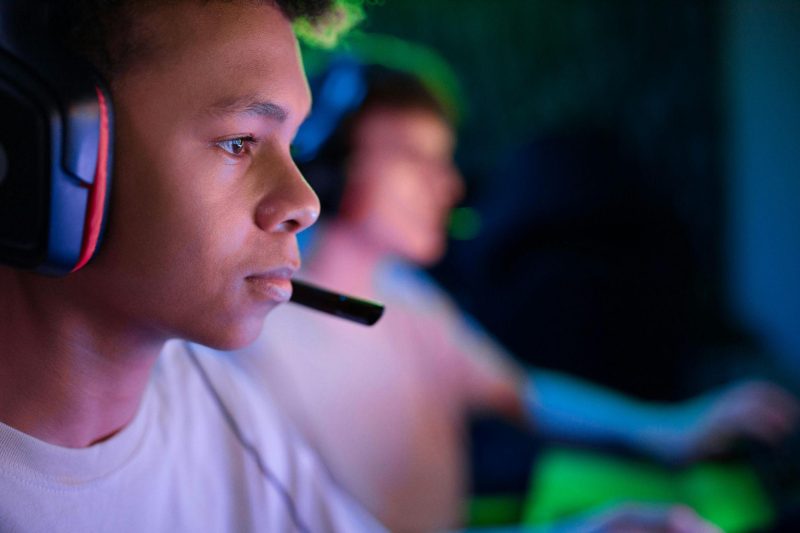
Think high scores and gaming challenges are the only things you know about?
Believe it or not, but the investment industry is starting to wake up to a powerful secret. Gamers have skills that translate directly into market success. With the global gaming market at $178 billion in 2024 and close to 3 billion players worldwide, it’s time to pay attention to this overlap.
Ready for the big reveal…
Competitive gaming skills are the EXACT same skills that you need to crush it in financial markets.
You’ll learn:
- How Gaming Translates to Financial Thinking
- Risk Assessment & Management Advantage
- Pattern Recognition and Market Analysis
- Emotional Control in High-Pressure Situations
- Building a Winning Financial Gaming Strategy
How Gaming Translates to Financial Thinking
Think every decision doesn’t matter in games?
Wrong. Gamers are CONSTANTLY making split-second decisions that involve risk/reward analysis. Push that aggressive play or play it safe? Invest in that new item now or save up? Are those “just games” questions. These are the fundamentals of sound financial decision-making.
Studies have shown that cognitive skills like decision-making and risk assessment improve significantly by training with video games. Professionals in fields like nursing, surgery, and anesthesiology all demonstrated significant skill improvements after working with video game-based simulation training.
And here’s a secret most people don’t know:
The ability to process multiple streams of data quickly and effectively (something most gamers do naturally) is EXACTLY what great traders need. Processing prices, reading charts, monitoring news, managing positions, analyzing levels, and coordinating trades is a juggling act that gamers are well prepared for.
Games are no longer just games for most of the players out there. Serious players are looking for platforms that can help them grow in both their gaming and financial education skills. Do you want to learn more about gaming platforms that also help you understand the markets better and more interactively? It’s not as difficult as you think.
From platforms that offer skill-based gaming to improve financial knowledge to more conventional ones that focus on serious market education, there are some interesting solutions around. Gaming isn’t just a hobby. For millions around the world, it is an education in making fast, high-pressure decisions.
The global skill gaming market reached $40.85 billion in 2024 and is expected to reach $92.03 billion by 2030. That’s no small growth. People are waking up to the skills you gain from serious gaming.
Risk Assessment & Management Advantage
Here’s a secret…
Good investors and great investors are separated by their risk management abilities.
Gamers are experts at risk assessment. Strategy games in particular involve CONSTANT risk management and probability calculations. Should I pull off this risky maneuver or play it safe? Will that gamble be worth it? How much can I afford to lose here?
See the connection?
Picture a situation in a game where you have to decide whether to initiate a team fight or play defensively. It’s the exact same calculation as assessing whether to buy or sell in the market, deciding how much of a position to take, or evaluating if now is the right time to enter.
Gamers hold an edge because you’re used to taking calculated risks every single day. You’re evaluating market conditions, playing the odds, and making moves accordingly.
In card-based skill games alone, players will develop amazing abilities to calculate probabilities and odds. Skills that directly relate to risk hedging, options trading, and position sizing in markets.
Pattern Recognition & Market Analysis
Get ready to be surprised…
Elite gamers are the masters of pattern recognition.
You’ve trained yourself to see the patterns, spot opportunities, and predict outcomes. In games, this comes from reading opponents, recognizing meta shifts, and understanding game mechanics. This is no different than market analysis.
Markets are full of patterns. Price movements, trading volumes, seasonal trends. Spotting these and acting on them is where the money is made.
Gamers already have a head start because you’ve been training without even knowing it:
- Identifying patterns quickly from thousands of hours of gameplay.
- Adapting to new patterns when things change.
- Spotting new trends before they become mainstream.
There are some very clear analogies between game economics and real financial markets. Gamers often practice portfolio management, risk assessment, market forecasting, and other high-level financial skills through successful in-game trading.
Emotional Control Under Pressure
Hold up. We need to talk about something crucial…
Tilt.
Gamers know tilt. It’s when your emotions override your decision-making, and you start making mistakes. Angry about a loss? Piling into trades because you’re winning too easily? Tilt is your worst enemy.
This is not a secret to traders either. We all experience it. The markets will mess with your emotions. Grueling drawdowns, new lows, and getting FOMO when something moves against you are all things that can mess with your mind.
Gamers have been training for tilt their whole careers. You know how to:
- Keep calm when in a losing streak.
- Avoid revenge trading or revenge gaming.
- Take breaks if emotions are high.
- Stick to your plan even if short-term results suck.
These are the lessons of successful trading.
You’ve built this discipline through gaming. It’s just a matter of applying it to markets.
Strategy Development & Execution
Last but most definitely not least, here’s where gaming really starts to shine…
Strategic thinking.
Winning gamers have a plan. You develop a strategy, test it out, refine it, and then execute relentlessly. You evaluate, learn from your mistakes, and get better.
Professional investors think this way too.
Take a look at how you game:
- You research meta and understand what is working before a new season.
- You develop your strategy based on your play style.
- You test different approaches in low-risk situations (scrims).
- You track your stats and identify what works, what doesn’t.
- You remain disciplined even when results aren’t immediate.
Swap “gaming” for “market” and you’ve got a recipe for investment success.
You don’t have to learn any of this from scratch. You already know how to do it.
Building a Winning Financial Gaming Strategy
Time to turn those gaming skills into financial success!
The best place to start is to recognize the value of what you already have. Gamers have significant advantages in:
- Data analysis skills from interpreting game stats.
- Resource management from builds and in-game economies.
- Competitive positioning and meta understanding.
- Long-term planning from working toward objectives.
None of this is a bad thing, but it does mean that your entry point is going to be different. The most important part of any good strategy is research. You wouldn’t start a ranked season without scouting and testing. Don’t start markets the same way.
Step 1.
Start small. Get a paper trading account or demo simulator. Get comfortable with the mechanics without any real money on the line.
Study market fundamentals just like you’d study a new game meta. Understand the rules, identify the “winners” and “losers”, and develop your strategy.
Track everything. Keep detailed records of your decisions, wins, and losses. Look for patterns in your behavior. Identify mistakes.
Above all, humility goes a long way. Skills will transfer, but the markets are a different animal. Respect the learning curve.
Wrapping Up
Gamers have skills that investors could only dream of.
The game industry has reached nearly $180 billion not just through delivering games but through developing skills at scale. You have trained yourself to be a disciplined decision-maker with lightning-fast reactions and emotional control. All through gameplay.
Most of the gaming skills you’ve picked up will apply one-to-one with market success.
Pattern recognition, risk assessment, emotional control, strategic planning, and long-term thinking. These are the core skills that you will need to outperform the market.
The only question is not IF you can use your skills to be successful but WHEN.
Take your gameplay experience and put it to work. Harness that discipline, that competitive spirit, and that emotional control. Then apply it to your financial education and investing. You will learn much faster than most people around you and build that financial freedom you have always dreamed of.
Gaming isn’t just a fun hobby, it’s preparation for success.