
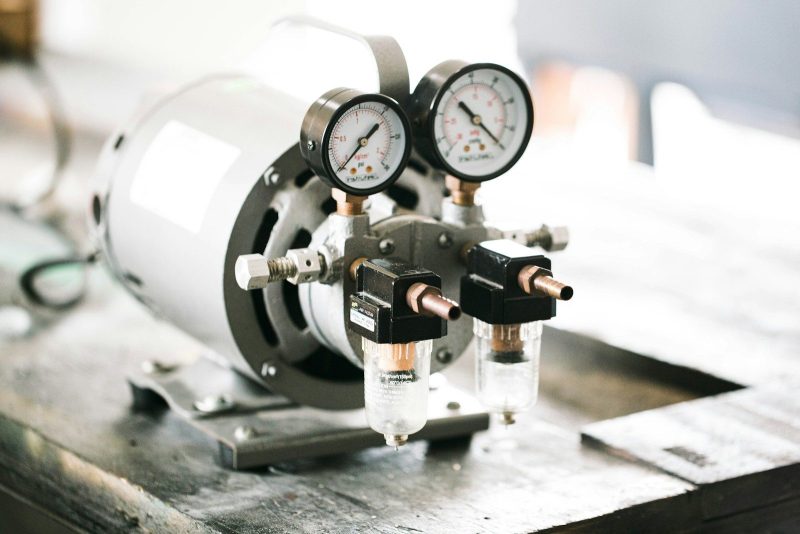
A failed pressure test is rarely just a failed pressure test. It ripples through every downstream trade, becomes a budget event the owner didn’t see coming, and can pull a project into regulatory review. On most job sites, though, the retest gets talked about the way a printer jam gets talked about: annoying, temporary, free. That framing is where the money starts to leak.
The assumptions people carry into a retest usually cost more than the retest itself.
It’s worth taking a closer look.
A Retest Is Not Just Repeating the Test
Most people assume a failed test means you fix the leak, pump the line back up, and move on. Once a hydrotest or pneumatic test fails, though, you’ve triggered a sequence of work that has almost nothing to do with the gauge reading.
The line has to be depressurized safely. Water has to be drained, captured, and often re-treated before disposal. The failed joint has to be located, cut out, rewelded, re-inspected, and cleaned before refilling. Each step has a crew, a cost code, and a clock, and every one is being done by people who were supposed to be on the next spread by now.
The Rework Bill Is Bigger Than the Repair
People tend to price a retest as the cost of a weld repair plus a day of lost time. That estimate is off by an order of magnitude on most jobs.
Rework in capital construction runs far higher than intuition suggests. A widely cited CMAA paper on the subject puts direct rework at roughly 5% of contract value, and closer to 7–11% once indirect costs are folded in. On a pipeline spread, one retest event pulls in radiographers, welders, NDE techs, testing contractors, water handling, and standby equipment, all mobilized twice for one deliverable. Rework-driven delay is also usually treated as contractor-caused, which means the days don’t come back.
The Weld That Failed Is Rarely the Only Problem
There’s a comforting story that a failed test points to one bad joint, you fix it, you move on. The inspection standards don’t let you off that easily.
Under common piping code rules, if a radiograph representing a lot of welds is rejected, the escalation requires two more welds from that lot to be shot. Reject one of those and you shoot two more. Keep rejecting and you end up radiographing the entire lot, on piping that’s already installed, insulated, and possibly buried.
A failed test isn’t a point defect. It’s a signal that your acceptance rate on that section is suspect, and the standard treats it that way.
The Regulator Doesn’t Forget a Failed Test
Another myth: fix it, retest cleanly, and the failure disappears from the project’s history. On regulated pipelines, that’s not how it works.
Federal test requirements for gas pipelines live in 49 CFR Part 192, and the documentation obligations don’t discriminate between a clean first test and a messy third one. Every pressurization, hold, failure, and remediation becomes part of the record the operator carries for the life of the asset. A test history full of retests changes how integrity assessments get scoped later, and it changes what a buyer or insurer will pay to take the asset on.
That cost never shows up on the project’s final report. It shows up years later, in someone else’s budget.
Retests Are Preventable Long Before the Gauge Is Attached
The last misconception is the most expensive: that retests are a normal part of construction and there isn’t much you can do about them. Most failed pressure tests trace back to decisions made weeks earlier, in fitting selection, weld procedure control, cleanliness of the fill medium, and the sequence of NDE relative to the test.
- Front-load the NDE. Radiography and PT on critical joints before the line is closed up is cheaper and faster to act on than radiography after.
- Control the fill medium. Dirty water, wet nitrogen, or contaminated air can mask leaks during the hold and reveal them after. Specify the medium and verify it at the pump.
- Right-size the test crew. Running a hydrotest with a skeleton team saves a shift and costs a week when something goes sideways.
- Use a specialist for the test itself. Owners who bring in a dedicated pressure testing contractor for hydrostatic and pneumatic work tend to catch procedural problems before they become schedule problems.
- Document as you go. A clean chart, a timestamped pressure log, and a chain-of-custody on the test medium make the difference between a one-hour conversation with the inspector and a one-week hold.
These steps are the difference between treating the pressure test as a checkbox and treating it as the last honest look you’ll get at the line before it goes into service.