
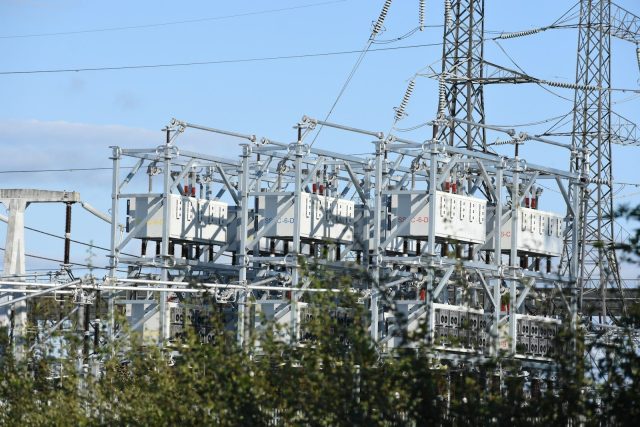
A transformer sitting on a flatbed near a substation pad it can’t reach is an expensive scheduling problem. Months of procurement and planning have gone into the delivery, the crane crew is scheduled, and the project team is counting on installation proceeding on time.
Then the truck reaches the end of the prepared road. The shoulder is too soft for the loaded trailer, a culvert hasn’t been evaluated for the haul, or a wetland crossing still needs approval. The transformer is ready, but the site isn’t.
Equipment lead times and interconnection delays receive much of the attention in utility construction. Yet an unfinished access route can stop critical equipment just short of its destination.
Transformers Aren’t the Only Long Lead Time
Large power transformers can require lengthy procurement periods, particularly when designs are specialized or manufacturing capacity is constrained. Project schedules often account for those delivery windows well in advance.
Access requirements introduce their own dependencies. Road improvements, environmental permits, railroad crossings, utility relocations, and temporary easements may involve outside parties whose schedules don’t align with equipment delivery.
A project that tracks transformer manufacturing closely but leaves access permitting until construction is underway risks discovering another critical-path activity too late.
Walk the Haul Route Before the Hardware Ships
A completed transformer pad doesn’t guarantee that a loaded trailer can reach it. Heavy-haul deliveries may require specialized transport equipment, carefully planned turns, and roads capable of supporting concentrated loads.
The route assessment needs to cover bridges and culverts, overhead clearances, road geometry, grades, soil conditions, and crane access. A route suitable for ordinary construction traffic may not accommodate a loaded transformer trailer.
Temporary ground protection and access matting can help crews cross suitable soft ground or protect surfaces during construction. But mats must be selected for actual loading conditions. They don’t replace structural evaluations of bridges and culverts or eliminate the need for engineered solutions where the ground is inadequate.
Finding those problems months before delivery leaves time to improve the route. Discovering them when the trailer arrives can mean rescheduling cranes, arranging temporary works, and extending equipment standby.
Interconnection Reform Doesn’t Resolve Site Access
FERC’s Order No. 2023 introduced reforms to generator interconnection procedures, including first-ready, first-served cluster studies. Those changes address parts of the interconnection process, not every permit or construction activity associated with a utility project.
A completed interconnection study doesn’t approve a wetland crossing, establish a county road’s load capacity, or provide access across private property. Those requirements involve separate authorities, agreements, and engineering work.
The project schedule needs to account for both processes, even when different teams manage them.
Distribution Work Brings Its Own Access Challenges
Rural substations, distribution corridors, and remote equipment locations may require crews to cross agricultural land, drainage areas, or seasonally saturated ground.
The Department of Energy’s work on last-mile distribution examines the importance of distribution infrastructure to grid reliability. Although that research doesn’t specifically address transformer delivery, it underscores the operational significance of infrastructure serving the final connection to customers.
For construction crews, the challenge is often the difference between routine access and heavy-equipment access. A road that accommodates pickup trucks may not support a loaded crane or transformer trailer. Temporary routes must account for equipment loads, expected traffic, environmental restrictions, and site restoration.
Who Pays When the Haul Can’t Reach the Pad?
The transportation contract may assign delivery to one party while another is responsible for preparing the route. If those responsibilities aren’t clearly defined, a stranded transformer can become a dispute over standby charges, crane delays, and additional construction work.
Responsibility depends on the agreements and circumstances. Owners, contractors, and transportation providers may have different obligations for surveys, permits, road preparation, and delivery coordination.
Those details are easier to settle before the equipment ships than while everyone is calculating the cost of another day on standby.
Price the Access When You Order the Equipment
The haul route, crossing approvals, temporary roads, crane working areas, and final pad approach belong on the same schedule as transformer procurement.
That means involving heavy-haul specialists and engineers early, identifying permits before construction reaches its final stages, and evaluating temporary access against actual loads and soil conditions.
Ground protection and access matting may be part of the solution, but the cheapest approach isn’t necessarily appropriate for the equipment or terrain.
A transformer delivery is successful only when the equipment reaches a site prepared to receive it. Planning that final stretch with the same attention given to manufacturing and transportation can prevent an expensive delay at the worst possible moment.