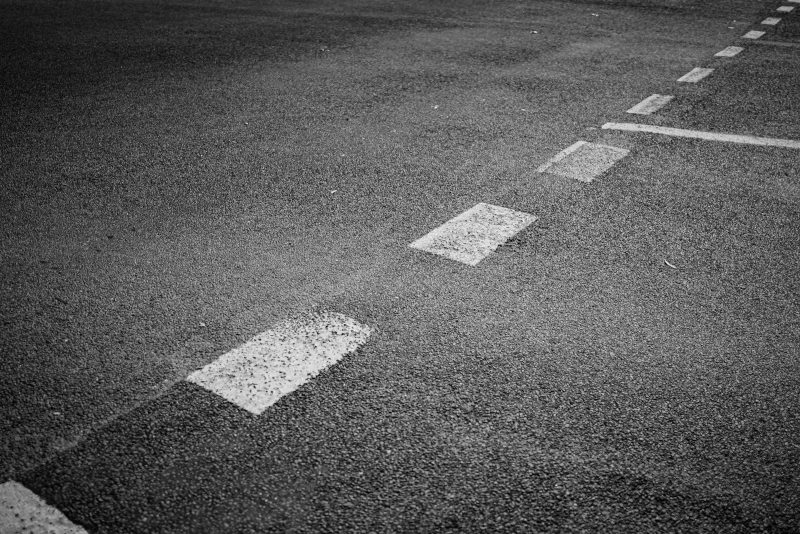
A production lane-keep assist system, pushed into heavy rain during open-road testing, drifted more than a meter out of its lane and then quit on the driver roughly three and a half seconds later. Sit with that number for a moment. Researchers documented the drift past a meter, followed by a silent handoff back to a human who thought the car was watching the line. Now put a motorcycle in the next lane during those same three and a half seconds.
That one scenario is the thread running through this piece. Follow it from what the car recorded, to who gets to read the log, to how the log reshapes the fault argument when the vehicle on the receiving end was a bike.
The Three and a Half Seconds That Make a Sideswipe
Start with what the system is doing in those seconds. A camera is tracking lane markings, the controller is nudging the steering, and a classifier is deciding what counts as a vehicle and what doesn’t. When rain, glare, worn paint, or a low sun degrades the input, the car can wander before it warns the driver.
In the testing above, the drift came first and the disengagement came after. A rider traveling parallel in that window has no way to know the car next to them has effectively stopped steering itself, which is why an experienced motorcycle injury attorney will push to preserve the car’s electronic record before it is overwritten or scrapped.
One specific point matters here: lane-keep assist is sold as a sideswipe-prevention feature, and on the whole it does help. IIHS research on lane departure warning and blind spot detection has tied these systems to measurable reductions in the same-direction and lane-change crashes they target. The average day isn’t the problem. The problem is the edge case the log captures when the average fails, and the motorcycle happens to be the thing the system didn’t resolve.
What the Car Actually Wrote Down
Modern driver-assist vehicles log more than most owners realize, but less than most plaintiffs assume. Some manufacturers already record ADAS activations, including forward crash warning, automatic emergency braking, and lane-keeping, inside or alongside the event data recorder, sampled a couple of times per second and sometimes faster. Steering torque, lane-centering state, driver hands-on-wheel status, and the moment of disengagement often sit in that file.
The piece usually missing is the one that would settle the sideswipe argument fastest: a labeled record of what the perception system saw and classified in the lane next to it. The car can tell you it was centering. It frequently cannot tell you whether it saw a motorcyclist and chose to ignore them, or never saw one at all. For investigators, that absence is itself evidence.
Who Gets to Pull the File
Access is the quiet battle after any serious crash involving an assist-equipped car. A few things usually determine who reads the log first:
- The vehicle owner. The driver or titleholder generally controls consent to a download, and insurers often ask for it as part of claim cooperation.
- Law enforcement. With a warrant or a cooperative owner, police can image the EDR and, where available, the ADAS log through the manufacturer’s tool.
- A civil litigant. An injured rider’s attorney has to move fast with a preservation letter, because repair, resale, or a totaled-vehicle auction can put the module out of reach within weeks.
- The manufacturer. Some ADAS data lives only on the automaker’s servers, not on the car, and only the automaker can produce it, usually under subpoena.
A rider who doesn’t know the car has a story to tell may never ask for it.
Why Motorcycles Are the Hard Case for These Systems
Perception systems trained mostly on cars and trucks have a narrower profile to work with when a motorcycle enters the frame. A bike occupies less pixel area, moves laterally within its own lane, and can slip behind an A-pillar in a way a sedan can’t. Blind-spot monitoring and lane-change assist can miss it entirely on the approach.
That isn’t an abstract complaint. Left-turn and lane-change geometries already dominate serious motorcycle crashes with another vehicle, and the assist features marketed as the fix for lane-change collisions were not necessarily tuned for the smallest legal thing on the road.
When a sideswipe case lands on a desk, the question is no longer only what the driver saw. It’s what the car saw, what it decided to do about it, and what the log admits it missed.
What a Rider Should Do in the First Week
- Photograph the other car’s badging. Trim levels decide whether lane-keeping and blind-spot monitoring were even installed.
- Send a written preservation letter. Ask the driver, their insurer, and the body shop not to repair, reset, or scrap the vehicle’s electronic modules.
- Ask about cloud data. Some ADAS and telematics records live on the manufacturer’s servers and need a separate request.
- Don’t guess the speed in your statement. The car’s log will have a number. Yours should match reality, not a round figure under stress.
The lane-keep system that didn’t see you still wrote down what it did. Make sure someone reads it before the file is gone.