The U.S. cent has been around ever since the establishment of the Mint. So, it is definitely historically quite important, and it is no wonder that a lot of collectors are interested in getting some of the earlier designs for their collections. And, there are quite some different designs that you can find, starting with the larger coins and ending with the small coins that have been introduced in the second half of the 19th century. The Indian Head cent is, without a doubt, one of those that grab a lot of attention even today, attracting collectors all around.
Here is some basic info about it: https://en.wikipedia.org/wiki/Indian_Head_cent
Produced during one of the most transformative periods in the history of America, this iconic coin has circulated to quite some important periods and events, such as the Civil War, the Industrial Revolution and similar. It has been in circulation from 1859 to 1909, but it remains rather popular up until today, as one of the most widely collected coins in the US. So, whether you are a seasoned numismatist, or perhaps just a person that is starting to explore coin collecting, or you are basically interested in the history and the appeal of this particular cent, there is no doubt that you have quite some questions about it.
And, well, what we are going to do right now is answer those questions for you below. You want to know that the Indian Head cent actually is, as well as why it is that collectors love it so much these days. Without any kind of further ado, thus, let us start talking about all of that right away, answering your questions and hoping to make things much clearer to you.
What Is the Indian Head Cent?
Unsurprisingly, we are going to begin with the most basic question here, and that is the question of what the Indian Head cent actually is. To cut right to the chase, this is a one-cent coin that was produced by the United Stated Mint during the period between 1859 and 1909, thus being used in two centuries. It has been introduced as the successor to the Flying Eagle, which has shown to be quite impractical to manufacture quite quickly after it has been first created. The Indian Head coin, on the other hand, has proven to be practical, given that it remained in circulation for 50 years, before being replaced by the Lincoln cent. Learn more about it.
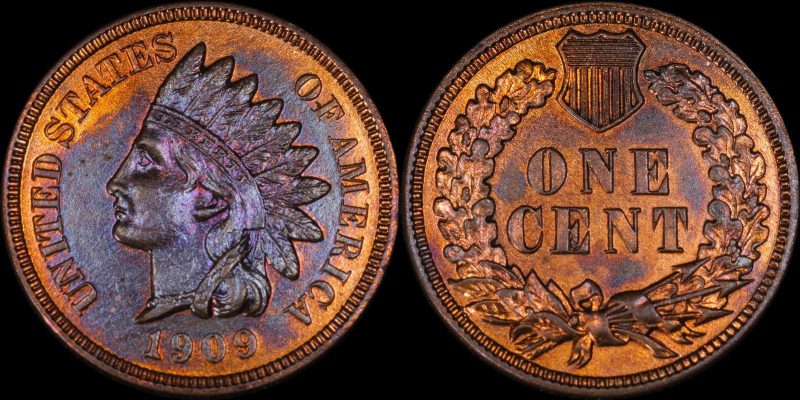
This specific coin has been designed by the Chief Engraver of the Mint at the time, called James Barton Longacre. The front side, which is also known as the obverse, features a portrait that is most commonly referred to as the Indian Head. You would think that the portrait was of a Native American individual, but that is not the case, contrary to that popular belief. Instead, it is a portrait of Lady Liberty wearing a Native American style feathered headdress.
The reverse design has undergone some changes during the production run of the coin. The early versions features a wreath surrounding the denomination, and the later versions included an oak wreath coupled with a small shield at the top. These later versions gave the coin a more detailed and patriotic appearance, which is probably what the designers have been aiming at specifically.
This coin, as it may be clear to you already, emerged during a period of significant changes in the coinage of America. Basically, the coins that have been manufactured prior to 1857 have been rather large and cumbersome, which made them quite expensive to produce over time as well. And, the introduction of the smaller cents, with the Flying Eagle being the first one, solved those problems. Yet, it created some problem of its own.
To put it simply, the Flying Eagle design was extremely difficult to strike properly, which then caused excessive wear on coin dies and basically creating quality control issues. The Indian Head was introduced by the Mint in an effort to address these concerns and resolve the problems, and that is precisely what it succeeded in doing. After all, this new design improved production efficiency, while at the same time maintaining that small size that the public has already accepted, all of which led to it quickly becoming one of the most recognizable coins in circulation.
Why Do Collectors Love It?
Okay, now that you understand what this coin is, you have another question on your mind. Basically, you want to know what makes the Indian Head cent collectible and why it is that collectors love it so much in the first place. And, well, we are now going to mention a few of those important reasons, hoping to make things clearer, and to even help you make up your mind on whether you want to make this cent a part of your collection or not.
So, first things first, there is the historical significance of the coin. After all, the fifty year production span certainly covers quite an extraordinary part of American history. And, a lot of collectors love owning those coins that have circulated during the presidency of Abraham Lincoln, the Civil War, as well as the rapid industrialization that the country experienced. Thus, every single Indian Head cent represents a tangible connection to the past, which is what attracts collectors.
Of course, we also cannot fail to mention the attractive, distinctive, and one of the most recognizable designs in American numismatics. That combination of the portrait of Liberty and the headdress, with the elegant reverse creates a kind of a timeless appearance that is sure to appeal to collectors regardless of their experience level. In fact, even those individuals that don’t really know much about coins often recognize this design immediately, and find it quite attractive.
Apart from that, you should also know that, unlike some other U.S. coin series, the Indian Head cents actually offer relatively affordable entry points for those collectors. Sure, some rare dates can be expensive, but a lot of common-date examples can actually be bought for quite reasonable amounts. This, clearly, allows beginners to start building their collections without making a large financial commitment early on.