
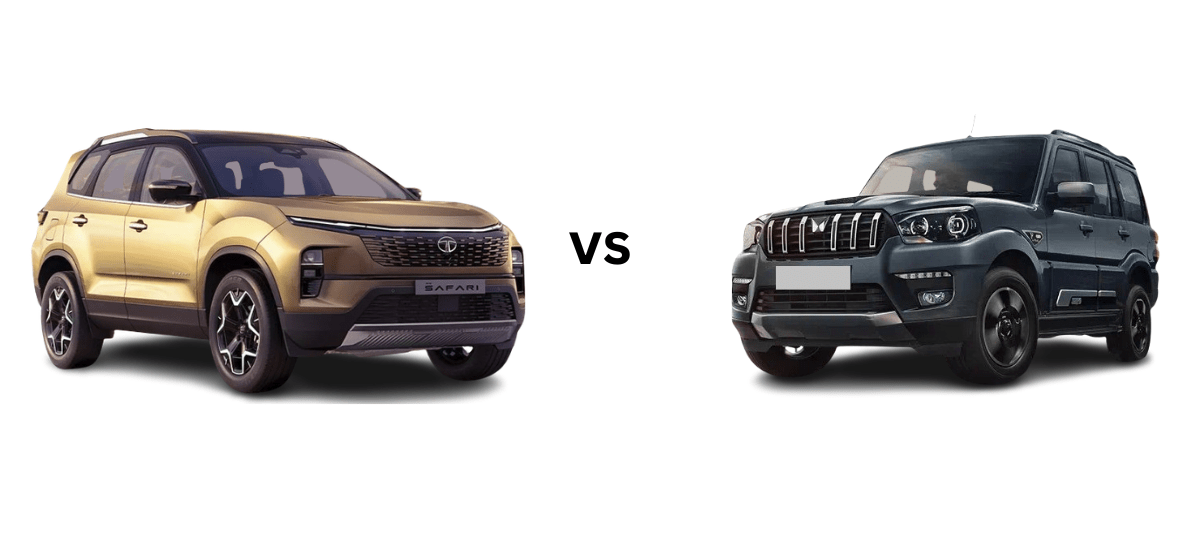
The definition of an SUV in India has undergone a significant transformation. What once stood for ruggedness, durability, and mechanical strength has now expanded to include safety, comfort, and advanced technology. The Tata Safari and the Mahindra Scorpio Classic represent two ends of this evolution, offering insight into how the meaning of an SUV has changed over time.
This comparison is not just about two vehicles—it is about how expectations from SUVs have evolved.
The Traditional SUV: Strength and Simplicity
The Mahindra Scorpio Classic represents the traditional definition of an SUV. It is built around rugged construction, commanding presence, and mechanical reliability.
Key characteristics of this traditional SUV approach include:
- Body-on-frame construction for durability
- High ground clearance and robust suspension
- Strong diesel engine with 300 Nm torque
These attributes make it suitable for rough terrains and demanding conditions.
For many buyers, this combination defines what an SUV should be—tough, capable, and dependable.
Emotional Connection and Identity
The Scorpio Classic is not just a vehicle; it carries a strong emotional value. It is described as “not just an SUV, it’s an emotion”.
This emotional connection is rooted in:
- Its long-standing presence in the market
- Its association with power and authority
- Its consistent design language over time
This reinforces the idea that traditional SUVs are as much about identity as they are about functionality.
The Modern SUV: Safety, Comfort, and Technology
In contrast, the Tata Safari represents the modern interpretation of an SUV. It is designed to meet contemporary expectations, where safety, comfort, and technology are equally important.
Key features that define this approach include:
- ADAS Level 2+ with multiple driver assistance systems
- 7 airbags, including a knee airbag
- Advanced infotainment system with cinematic display and connected features
These features indicate that modern SUVs are designed not just to perform, but to enhance the overall driving experience.
Shift in Engineering Philosophy
The Safari is built on the OMEGARC platform, derived from Land Rover’s D8 architecture, highlighting a shift toward monocoque construction and advanced engineering.
This approach prioritises:
- Structural rigidity and crash safety
- Improved ride comfort and handling
- Better integration of technology
In contrast, the Scorpio Classic’s body-on-frame structure emphasises durability and load-bearing capability.
This difference reflects two distinct engineering philosophies.
Interior Experience: Utility vs Premium Comfort
The interior of the Safari reflects modern expectations:
- Ventilated seats, panoramic sunroof, and ambient lighting
- Premium leatherette upholstery and advanced infotainment systems
- Multi-zone climate control and connected features
These features create a comfortable, luxurious environment suitable for long journeys and family use.
The Scorpio Classic, however, offers a more functional interior:
- Fabric upholstery and straightforward dashboard design
- Basic infotainment with phone mirroring
- Practical seating configurations and essential features
This reflects a focus on utility rather than luxury.
Safety: A Changing Benchmark
Safety is one of the most significant factors redefining SUVs.
The Safari’s advanced safety features, including ADAS and multiple airbags, highlight how modern SUVs prioritise proactive protection.
The Scorpio Classic offers basic safety features such as dual airbags and ABS, which provide essential protection but lack advanced systems.
This shift indicates that safety is now a key component of the SUV definition.
Performance: Balanced vs Purpose-Built
Performance expectations have also evolved.
The Safari offers both petrol and diesel engines with up to 170 PS, designed for balanced performance and efficiency.
The Scorpio Classic focuses on diesel power and torque, prioritising strength and capability over refinement.
This highlights how modern SUVs aim to balance multiple roles, while traditional SUVs remain purpose-built.
Changing Buyer Expectations
The difference between these two vehicles reflects changing buyer expectations:
- Traditional buyers value ruggedness, simplicity, and durability
- Modern buyers prioritise safety, comfort, and technology
This shift is driven by changing usage patterns, with SUVs increasingly used for both daily commuting and long-distance travel.
The Role of Digital Platforms
Online car-buying platforms such as ACKO Drive help buyers understand these differences by comparing features, safety systems, and performance. This allows users to evaluate what an SUV means to them and make the purchase decision accordingly.
Conclusion
The Tata Safari and Mahindra Scorpio Classic reveal how the definition of SUVs has evolved in India. While traditional SUVs focused on toughness and mechanical strength, modern SUVs emphasise safety, comfort, and technology.
Rather than replacing one another, these two approaches coexist—offering buyers the flexibility to choose an SUV that aligns with their expectations.