
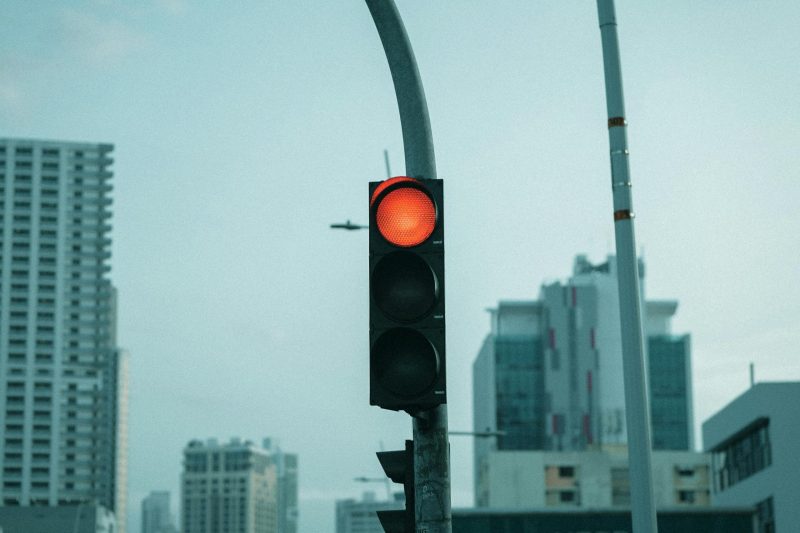
Have you been hit by a driver who blew through a red light?
The natural reaction is to think that the red light runner is 100% at fault. That is not always how insurance companies or courts view it. In California, fault can be apportioned to both drivers — and that can have a huge impact on your settlement.
Every percentage point of fault reduces the money you walk away with.
Here is what you need to know…
What’s Inside This Guide:
- What Is Comparative Fault?
- How California’s Pure Comparative Fault Rule Works
- How Fault Is Split In Red Light Running Accident Claims
- How To Protect Your Claim
What Is Comparative Fault?
Comparative fault (alternatively known as comparative negligence) is a principle of law for apportioning blame amongst all the parties involved in an accident.
In layman’s terms: if you and the other driver were both wrong, the insurance company or a jury will apportion a percentage of fault to each of you. Your award, if any, is reduced by your percentage of fault.
This is critically important in red light accident fault cases, because these accidents occur at high speed and in busy intersections. There are often multiple actions occurring simultaneously:
- One driver running the red
- Another driver speeding through a green
- Someone on their phone
- A driver making a left turn
Any of those actions can shift the percentages around.
The biggest point to understand is that the fact that the other driver ran the light does not necessarily mean that you will automatically recover 100% of your damages.
How California’s Pure Comparative Fault Rule Works
California uses something called “pure comparative fault.”
Here is why that matters…
Some states bar you from recovery if you are more than 50% at fault. California does not. Even if you are 99% at fault for your accident, you can still recover 1% of your damages.
It’s one of the more plaintiff-friendly systems in the nation. The catch — insurance companies know this rule as well, and will fight very hard to try to push more fault onto you in order to reduce the payout. If you want to have real support fighting back, working with the top local attorneys for red light running accidents is often the smartest move to protect your claim value.
Here is a quick example of how the math works:
Say someone ran a red light and hit you. Your total damages (medical expenses, lost earnings, property damage, pain and suffering, etc.) are $100,000.
- If you are found 0% at fault → you get $100,000
- If you are found 20% at fault → you get $80,000
- If you are found 50% at fault → you get $50,000
- If you are found 80% at fault → you get $20,000
See how big of a difference this makes? That is why fighting over fault percentages is such a major part of these cases.
How Fault Is Split In Red Light Running Accident Claims
Red light running is a serious problem. Crashes at red lights killed 1,086 people in 2023 and injured more than 135,000 others in the United States.
Even in the most obvious of cases fault is typically shared. Here are a few common scenarios that would likely leave you with a percentage of fault in a red light crash:
You Were Speeding
If you had a green light and were speeding over the posted limit, an adjuster will say you would have had more time to stop. They will typically give you 10-30% of the blame.
You Were Distracted
Were you on your phone? Eating? Fiddling with the radio? If there’s evidence that you were distracted — phone records, dashcam, eyewitnesses — the other side will use it to throw blame in your direction.
You Did Not Attempt To Avoid The Crash
Drivers have an obligation to take reasonable actions to avoid an accident, even if the other driver ran a red light. If you could have seen the other vehicle and didn’t even brake or swerve, you could be partly at fault.
You Ran A “Yellow” Yourself
Here is a tricky one…
If you went on a late yellow to enter the intersection the other driver’s attorney may argue that both of you ran the light. This happens a lot at busy intersections with short yellow times.
Poor Vehicle Maintenance
Broken brake lights, bald tires and bad brakes are all examples of “fighting back.” If your car couldn’t stop as well as a properly maintained vehicle, some of the blame may be shifted to you.
How To Protect Your Claim
The good news is that there are things you can do to protect yourself. Here’s exactly what to do after a red light collision:
Call The Police And Get A Report
It’s not optional. A police report is an official record of what occurred, who was cited and which driver the officer thought caused the crash. It has significant impact with insurance adjusters.
Gather Evidence At The Scene
If you are able to:
- Take photos of both vehicles
- Photograph the intersection and traffic lights
- Get contact info from every witness
- Note any nearby businesses that might have surveillance cameras
Video is king in red light cases. It is frequently the only piece of evidence that resolves the fault issue conclusively.
Get Medical Attention Right Away
Go see a doctor even if you think you are okay. Injuries such as whiplash and concussions may take a few days to appear. If you wait, it allows the insurance company to claim your injuries were not a result of the crash.
Do Not Talk To The Other Insurance Company
This one is big…
The other driver’s insurance company will call you very soon. They have skilled people who will try to get you to say something that can be used to shift blame to you. Let your attorney handle all communication.
Get A Lawyer Involved Early
Insurance companies view these cases as just another day at the office. They have a playbook. You need someone who has the playbook as well, and who can call their plays against them.
Final Thoughts
Red light running crashes are more frequent (and fatal) than most drivers know. If you have been involved in one, don’t automatically assume fault.
Insurance companies will attempt to place blame on you to lower what they owe. California is a pure comparative fault state. That means every percentage point counts.
To quickly recap:
- Comparative fault splits blame between all parties
- California lets you recover even if you are mostly at fault
- Speeding, distraction, and late yellows all shift fault
- Evidence is everything — gather it fast
- Never admit fault at the scene or to the insurance company
Respect your claim. The settlement you can recover may fund years of therapy, lost income, and your pre-accident life.