
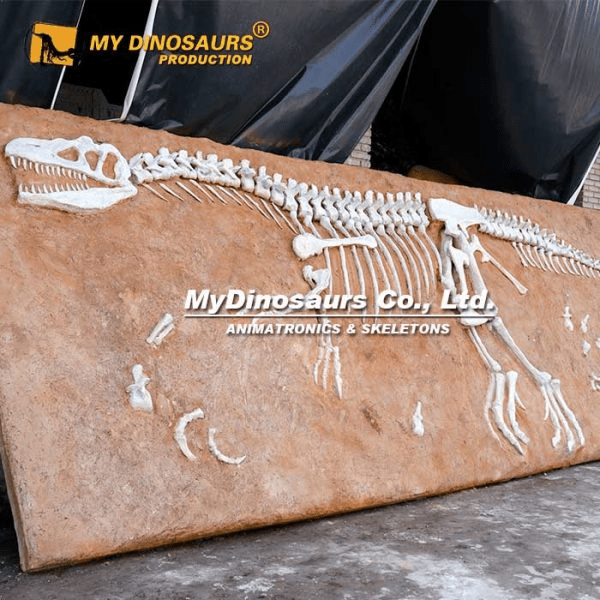
Dinosaur exhibits captivate millions of museum visitors every year, but few people realize how much work goes into preparing those ancient giants for display. The skeletons appear seamless and complete—standing tall, posed dynamically, and illuminated by gallery lights—but the journey from excavation site to exhibit hall is long and meticulous. This is especially true for allosaurus skeletons fossils, which serve as iconic representatives of Jurassic predatory life.
For general audiences, questions often arise: How were these bones found? Are they real or reconstructed? What does it take to assemble something so massive? Understanding the preparation process not only satisfies curiosity but also deepens appreciation for scientific research and conservation. This article breaks down each stage of that journey, offering an accessible and informative look at how an Allosaurus goes from buried remains to museum centerpiece.
The Significance of Allosaurus in Museum Education
Allosaurus is one of the most widely studied theropods due to the abundance of fossil discoveries across North America and parts of Europe. Its skeletal structure showcases essential features of large carnivorous dinosaurs: powerful jaws, sharp teeth, robust limbs, and a sweeping tail used for balance. Because of this, allosaurus skeletons fossils are frequently selected for educational displays. They help visitors imagine ancient ecosystems, understand predator-prey dynamics, and visualize evolutionary pathways leading to modern birds.
For many visitors, dinosaur exhibits address common points of confusion or curiosity, such as how paleontologists identify species, what parts of the skeleton are original, and how life-size mounts stay upright. These displays also resolve a widespread pain point for museum audiences: the challenge of understanding deep time and imagining creatures that lived more than 150 million years ago. A well-prepared Allosaurus skeleton bridges that gap by providing a tangible, dramatic connection to Earth’s distant past.
The Excavation Stage
The preparation of an Allosaurus exhibit begins long before any work happens in a laboratory or museum. Fossils are typically discovered in sedimentary rock layers formed during the Late Jurassic period. Paleontologists use geological maps and erosion patterns to locate potential dig sites. Once a promising bone fragment is found exposed at the surface, excavation begins with caution and precision.
Teams use a mix of delicate tools—small chisels, brushes, awls, and dental picks—to remove rock layer by layer. Every bone’s orientation, depth, and position is mapped and photographed to capture the scientific context. This documentation is critical; once removed, the bone can never return to its original position in the earth.
Because fossils can be fragile, they are often wrapped in soft materials such as paper or foil and encased in plaster “jackets.” These jackets protect the bone during transportation to a preparation lab, ensuring that millions of years of geological history are not damaged during the journey.
Cleaning, Consolidation, and Repair
Once the bones arrive at a lab, the meticulous work of fossil preparation begins. Technicians remove the plaster jackets and start freeing the bones from their surrounding matrix. Air scribes, micro-abrasive tools, dental picks, and fine brushes help remove sediment without damaging the fossil’s surface.
Cleaning a single bone can take days or weeks depending on its size and fragility. During this process, preparators stabilize cracks or fragile areas using reversible conservation adhesives. These materials strengthen the bone while still allowing future paleontologists to remove or revise restoration work if needed.
In some cases, parts of the skeleton may be missing or severely eroded. When this happens, careful reconstruction is performed. Missing pieces are recreated using neutral materials—often resin or 3D-printed components—clearly identified as restorations. The goal is not to deceive viewers but to create a structurally complete and scientifically accurate mount.
Replica Creation: When Accessibility and Preservation Align
Although many museums display original fossils, others use high-quality replicas created from molds of real bones. Replicas allow institutions to share important specimens widely without risking damage to fragile originals. They also make it possible to build complete Allosaurus mounts even when full fossils are not available.
The replica-creation process typically includes:
- Molding: Silicone or latex molds capture minute details of bone surfaces, including cracks, pits, and natural textures.
- Casting: Lightweight materials such as resin or fiberglass are poured into molds, forming durable stand-ins for the original bone.
- Finishing: Skilled artists paint and texture the cast to replicate the natural appearance of fossilized bone.
Replicas offer practical advantages, such as reduced weight, safer handling, and the ability to be displayed outdoors when necessary. This flexibility allows museums to create accessible, engaging exhibits for visitors of all ages and regions.
Engineering the Mount: Turning Bones Into a Standing Giant
Once fossils or replicas are fully prepared, the next step is mounting them into a lifelike pose. This phase combines science, engineering, and artistic interpretation. Because dinosaur bones cannot support themselves, especially at full scale, a strong internal armature is essential.
Mounting typically involves:
- A hidden steel frame shaped to fit within or around the bones
- Custom brackets to hold each vertebra and limb in place
- Load-bearing supports placed strategically for stability
Posing is a major decision. Should the Allosaurus be shown mid-stride, preparing to attack, or standing still in a neutral posture? Scientists and exhibit designers collaborate to balance dramatic visual impact with anatomical accuracy. Incorrect positioning can mislead visitors about movement or behavior, so every angle is reviewed with care.
Real Fossils vs. Replicas
| Feature | Real Allosaurus Fossils | Replica Allosaurus Pieces |
|---|---|---|
| Weight | Very heavy | Lightweight |
| Fragility | High | Low to moderate |
| Scientific value | Extremely high | Informational/visual |
| Display flexibility | Limited | High |
| Risk during transport | Significant | Low |
This stage may take weeks or even months, especially when the skeleton is large, articulated dynamically, or displayed in a unique architectural space.
Creating the Final Exhibit: Context, Storytelling, and Accessibility
Even the most carefully mounted skeleton needs context to become a meaningful exhibit. Museums add interpretive elements such as murals, timelines, interactive digital screens, or hands-on fossil replicas that allow visitors to explore the science more deeply.
Clarity and transparency are essential. Museums typically label which parts of a mount are original fossils and which are reconstructed or replicated. This ensures that visitors receive accurate scientific information and fosters trust in museum practices.
Lighting, pedestal design, and visitor-flow planning also play important roles. A well-lit Allosaurus can highlight the texture of allosaurus skeletons fossils, emphasize key anatomical features, and guide viewers’ eyes naturally from head to tail. Meanwhile, strategic placement of signage and pathways allows people to appreciate the skeleton from multiple angles.
Why This Process Matters for a Global Audience
Preparing an Allosaurus skeleton for display is a multifaceted effort that merges paleontology, conservation science, engineering, and storytelling. For visitors, these exhibits overcome several common challenges: it is difficult to imagine life millions of years ago, challenging to understand the scale of extinct animals, and nearly impossible to visualize how bones turn to stone through fossilization. By displaying complete and carefully prepared skeletons, museums make prehistoric life tangible and relatable.
More importantly, these exhibits inspire curiosity and learning. Children and adults alike gain a deeper appreciation for Earth’s geological history, the scientific method, and the remarkable creatures that once dominated the planet. Whether the mount consists of original bones or high-quality replicas, allosaurus skeletons fossils continue to be powerful educational tools.
Conclusion
Transforming an Allosaurus from buried fossil fragments into a towering museum exhibit is an extraordinary journey. The process combines careful excavation, painstaking cleaning, potential replica creation, and precise mounting. Each stage highlights a different branch of scientific and technical expertise, ultimately creating an experience that allows visitors to step millions of years into the past.
The preparation of allosaurus skeletons fossils reflects a broader mission shared by museums worldwide: to preserve history, educate the public, and inspire lifelong fascination with the natural world. Whether standing motionless in a grand gallery or posed mid-stride in a dynamic display, the Allosaurus remains a timeless ambassador of Earth’s prehistoric past.