
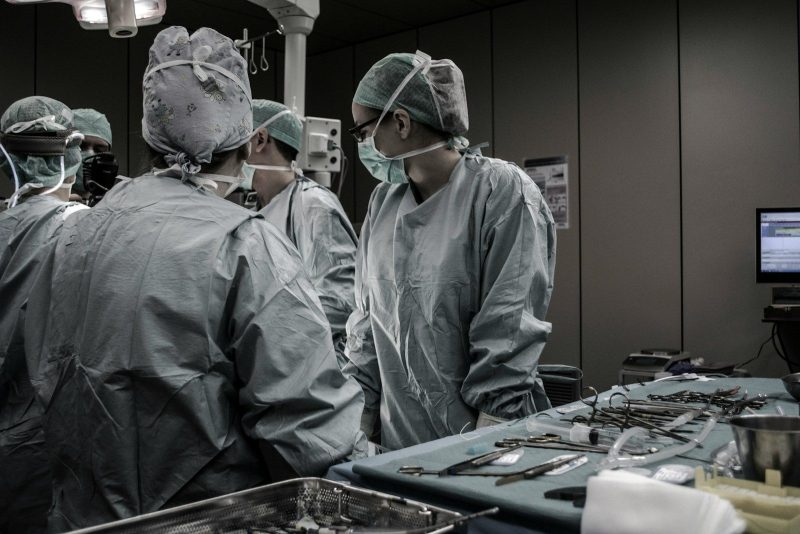
When people picture an operating room, they picture clean lines, precise instruments, and a team of professionals who look entirely in control. What they don’t picture is the surgeon’s lower back at hour six, the neck strain that’s been building since residency, or the slow grind of standing in the same awkward posture for thousands of cases.
The OR looks like a temple of technology. For the people working inside it, it often feels like a workshop built by someone who never had to stand in it.
So why is this only now becoming a real conversation in surgical technology?
The Injury Numbers Are Hard to Ignore
Surgeons aren’t supposed to talk about being in pain. The culture rewards stamina, and complaints get filed away with everything else that doesn’t help the patient on the table. But the data has finally caught up with the silence.
A multi-specialty survey found that 69.7% of surgeons reported musculoskeletal pain, and only 23.8% had ever received any prior ergonomic education. A separate review in PMC puts the lifetime number even higher: more than 80% of surgeons have experienced a work-related injury or illness tied to awkward or static positions held during long operations.
Those aren’t soft complaints. The underlying prevalence figures include degenerative spinal disease at 17%, rotator cuff pathology at 18%, and degenerative lumbar spine disease at 19% among surgeons. That’s a workforce of highly trained specialists quietly accumulating the same injuries you’d expect from heavy industry.
Retraction Is Where the Hidden Strain Lives
Most outsiders don’t think about retraction. Retraction is the unglamorous job of holding tissue out of the way so the surgeon can see and work.
Traditionally, that meant a person, usually a resident or an assistant, pulling on a handheld retractor for hours. Static load, fixed posture, and no breaks.
It’s also a patient safety question, not only an ergonomics one. The retractor itself can cause harm. A cadaveric and clinical review found that the lateral blade of a common self-retaining retractor was observed to compress or impinge the intrapelvic portion of the femoral nerve during colorectal surgery. The tool meant to create exposure was the same tool causing the injury.
Smarter Equipment Changes the Math
This is where the technology side of the story gets interesting. Table-mounted, hands-free retraction systems do something deceptively simple: they take the human out of the static-hold problem entirely.
The frame holds the tension. The surgeon controls the exposure directly. Fewer hands in the field, fewer fatigued assistants, and a more predictable working posture across long cases.
Manufacturers of modern retraction platforms have leaned into low-profile frames, radiolucent materials for clean intraoperative imaging, and modular blades that adapt across specialties without rebuilding the whole setup. That’s starting to shift how the OR is engineered around the surgeon instead of around the instrument.
The patient outcomes follow. A quasi-experimental study of standardized retractor management protocols, including mandatory 30-minute release intervals and conversion to non-metallic self-retaining abdominal wall systems, reduced femoral nerve injury incidence from 6.5% to 0.9% in gynecological surgery. The retractor wasn’t the villain. The way it was used was.
What Hospitals Should Actually Be Looking At
If you’re on the buying side of OR equipment, or you sit on a hospital capital committee, the framing is shifting. It’s not about which retractor is cheapest per unit. It’s about total cost across staff hours, complication rates, and surgeon longevity. A few specifics worth weighing:
- Staffing load. Hands-free retraction reduces the number of people needed at the table, which frees up assistants and trims OR labor cost over time.
- Case duration. Stable, table-mounted exposure tends to shorten setup and reduce mid-case repositioning, which compounds across a high-volume surgical service.
- Imaging compatibility. Radiolucent frames matter more as intraoperative imaging becomes standard. Metal in the field is friction.
- Cross-specialty use. A single frame that adapts across spine, abdominal, cardiac, and OB cases is easier to standardize, train on, and maintain.
- Surgeon retention. Career-ending neck and back injuries are expensive in ways no spreadsheet captures cleanly. Equipment that protects the operator protects the institution.
The OR Is Catching Up to Its Own People
For a long time, surgical innovation meant better imaging, better implants, better drugs. The surgeon was treated as a fixed input. That assumption is finally cracking. Professional bodies are publishing ergonomic guidance, training programs are adding posture and equipment modules, and equipment makers are designing around the human, not only the procedure.
The interesting part isn’t that the technology exists. It’s that the industry spent decades pretending it didn’t need to. The next generation of surgeons is unlikely to be as patient.