
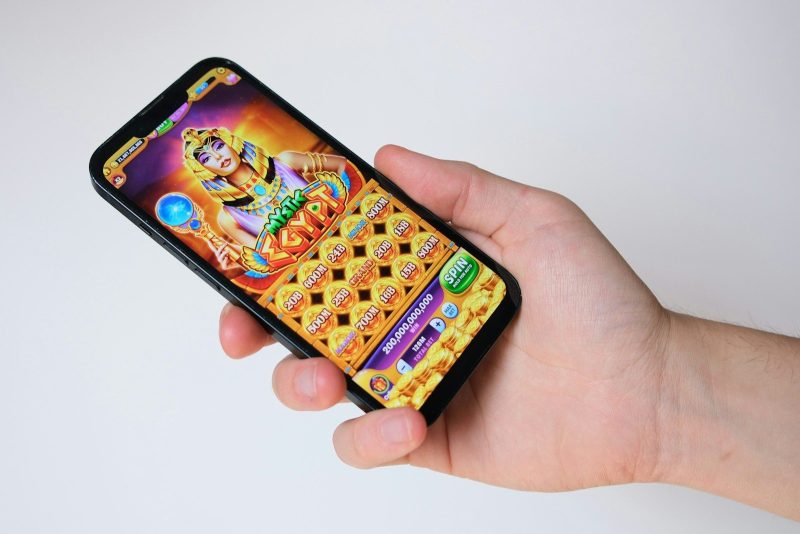
A good casino app usually gives itself away in the first minute. Sometimes faster. It opens quickly, nothing stutters, and you are not stuck guessing where the games are or why the cashier section looks like it was bolted on by a different team three years ago.
That tends to matter more than the flashy stuff. The reviews often speak of game counts and bonuses. But these are not the ones that make the first impression. It comes down to “does this thing feel solid”?
By 2026, the answer still comes back to the same handful of things. Speed. Security. Clean navigation. A phone-friendly layout. And, yes, enough game variety to stop it feeling stale after a week.
Speed gets judged before anything else
Before anyone starts comparing game lobbies or extra features, they notice whether the app behaves properly.
Google’s Android vitals treats crashes, hangs, battery drain and performance issues as core quality signals. Apple puts similar weight on launch time and responsiveness. And that makes sense – because nobody needs a technical breakdown to know when an app feels slow. You open it, it lags, you sigh, and that is already a bad start.
That matters even more here because casino apps are often used in short bursts. A few minutes here, a quick check there, and if the app takes too long to load, it doesn’t leave much room for goodwill.
A good app feels ready almost instantly. Bit dramatic, maybe. Still true.
The layout should feel obvious
Good UX is not about being clever. It is about not making people work for basic actions.
Google’s app-quality guidance keeps coming back to intuitive and consistent experiences. Apple says roughly the same in its own way. Different companies, same point: users should not need to re-learn the app every time they open it.
In practice, for a casino app, that usually means:
- clear paths between the lobby, account, payments and support
- a home screen that does not throw everything at you at once
- categories and search that help people find games quickly
- sign-in and onboarding that do not feel longer than they need to be
That all sounds obvious, which is probably why bad apps are so frustrating. They fail at things that should have been sorted early. Too many menus. Too much clutter. Buttons in odd places. A design that wants applause instead of just doing its job.
Security is part of the experience now
This used to sit in the background a bit more. Not anymore.
OWASP’s Mobile Top 10 still gives a clear picture of the common risks in mobile apps: weak authentication, insecure communication, shaky credential handling, poor privacy controls, bad data storage. That matters a lot when the app deals with accounts, payments and personal information.
Google Play shows privacy and security disclosures through its Data safety section. This is for you to get a better look at how an app says it handles data before you install it. That changes things. Security is no longer hidden away in a policy page nobody reads.
You’ll notice it through the login flow, the permissions, the payment screens, and the way sessions are handled. It’s the general feeling that the app either looks trustworthy or a bit off. Something like YYY Casino App sits inside that same logic. The name is not really the point. The question is whether it feels safe to use, safe to log into, and safe to put money through.
That answer shows up pretty quickly.
Mobile-first means more than “it fits”
A lot of apps technically work on a phone. That does not mean they feel built for one.
Google measures an app’s quality through its performance, UX, privacy and security, and core value.
If the app works fine but the interface is messed up, you’ll feel it immediately. The text is tiny. The buttons are fiddly. The app feels like a desktop site squeezed into a narrow screen.
A proper mobile experience means:
- controls that are easy to tap with one hand
- text that stays readable without zooming
- screens that behave properly across different phone sizes
- payment and account areas that feel as smooth as the game lobby
Accessibility belongs here too. Android’s accessibility guidance makes that pretty clear. Apps should work well for as many people as possible, including through readable layouts, sensible labels and interfaces that do not break the moment someone uses different input settings.
Not the glamorous part, no. Still one of the parts people remember.
Game variety matters, just not first
This is where a lot of app reviews go a bit wrong. They start with the number of games.
Variety does matter. Google’s quality guidance does point to content and feature depth as part of an app’s overall value. In this context, that usually means a decent spread of slots, table games, live options, maybe crash-style or instant-win titles depending on the platform.
But that only starts to matter once the basics are working. A huge library does not help much if search is messy, categories feel random, or the app slows down every time you move between sections. Big selection, bad flow. That trade-off shows up more often than it should.
So yes, range matters. It just tends to matter later than people think.
What users actually seem to care about
Strip away the filler and the priorities are pretty plain:
- fast launch and stable performance
- navigation that makes sense straight away
- login and payment handling that feels secure
- a mobile experience that suits real phones, not ideal ones
- enough game depth to stop the app feeling repetitive
That order is not universal. People are inconsistent. Some care most about payment speed. Some care about game variety. Some just want the app to stop crashing on an older device and not drain the battery like it is trying to prove a point.
Still, the pattern is there. The basics carry everything else.
So, what makes a casino app “good” today?
Usually, it is the one that feels reliable before it feels exciting.
That is the thread running through platform guidance from Google, Apple and OWASP, even if none of them are writing casino reviews. Fast loading. Fewer crashes. Cleaner navigation. Stronger login and privacy signals. A layout that actually feels made for a phone. Then, once all that is in place, the content gets a chance to matter.
Some apps still get distracted by noise. Too many features, too much clutter, too much effort spent looking busy.
The better ones are calmer than that. You open them, things are where they should be, nothing strange happens, and you get to the part you came for without having to wrestle the screen first.