
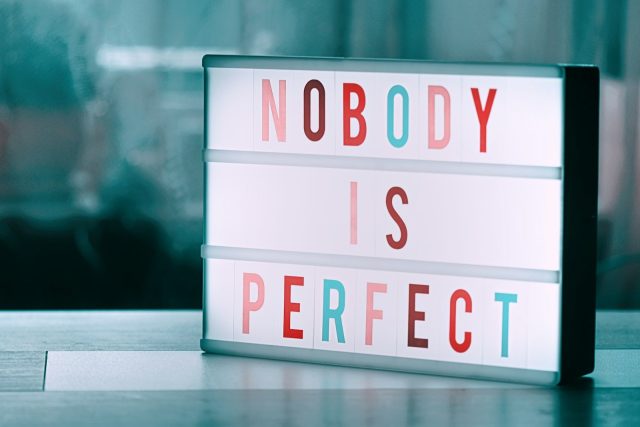
Perfectionism has a public image problem. It often gets dressed up as discipline, ambition, or high standards. People praise it because it looks productive from the outside. The polished report gets turned in on time. The mistake free presentation gets applause. The person who never seems to slip becomes the example everyone else is supposed to follow.
But inside the learning process, perfectionism behaves less like excellence and more like fear with good manners. It quietly changes the purpose of learning. Instead of asking, “What can I discover here?” a perfectionist mind asks, “How can I avoid looking unprepared?” That shift seems small, but it changes everything.
This is true in school, at work, in creative hobbies, and even in personal life. Someone comparing budgeting methods or researching options like credit card debt settlement can fall into the same trap as a student writing a paper. The goal stops being understanding. The goal becomes getting it right immediately. When that happens, curiosity shrinks, risk taking disappears, and progress slows down.
Perfectionism Turns Mistakes Into Identity Threats
The biggest problem with perfectionism is not that it creates high expectations. It is that it attaches those expectations to your worth as a person.
When mistakes feel like evidence that you are careless, unintelligent, or incapable, you stop seeing them as information. A wrong answer is no longer a clue. A weak first draft is no longer part of the process. A failed attempt becomes a verdict. That is exhausting, and it makes genuine learning much harder.
This is one reason growth mindset research remains so useful. Stanford’s Teaching Commons explains that students with a fixed mindset often become more concerned with proving intelligence than improving it, which can lead to discouragement and giving up when work gets hard. Stanford Teaching Commons on growth mindset and learning offers a clear overview of that pattern. Perfectionism feeds that same performance obsession. If every task becomes a test of your value, then every challenge feels dangerous.
The Real Cost Is Defensive Learning
A lot of people assume perfectionists learn more because they care more. In reality, they often learn less because they defend more.
Defensive learning shows up in subtle ways. You pick assignments you already know you can do well. You avoid asking questions because you do not want to sound lost. You spend too much time polishing familiar parts of a project and too little time wrestling with the difficult parts that would actually help you grow. You delay starting because a messy beginning feels unacceptable. You keep researching long after you need to because action creates the possibility of imperfection.
None of those habits are lazy. They are protective.
That is what makes perfectionism so sneaky. It can look like effort while actually functioning as avoidance. You are busy, but not always brave. You are active, but not always open. Learning requires some willingness to be temporarily bad at something. Perfectionism refuses that bargain.
Why Struggle Is Not a Sign You Are Failing
One of the most damaging beliefs perfectionism creates is the idea that struggle means you are not cut out for the task. If something does not come easily, the perfectionist brain often interprets that as proof of limitation instead of proof of growth in progress.
But struggle is not a warning light that says stop. In many cases, it is the work itself.
Educators have increasingly emphasized that learning is strengthened, not weakened, by engaging with mistakes. Edutopia has written about how students benefit when classrooms normalize error making and treat mistakes as opportunities to analyze thinking rather than hide it. That perspective is useful far beyond school. Edutopia’s discussion of learning from mistakes captures an idea adults need too: errors can help build stronger understanding when we examine them instead of rushing to erase them.
The first awkward conversation, the first rough draft, the first failed recipe, the first confusing spreadsheet, the first budget that does not balance. These moments are not proof that you should have waited until you were more ready. They are often how readiness gets built.
Perfectionism Loves Control, but Learning Requires Exposure
At its core, learning is exposure. You expose what you do not know. You expose your unfinished thinking. You expose weak spots in your habits, assumptions, and skills. That can feel vulnerable, especially if you are used to being praised for competence.
Perfectionism tries to solve that discomfort by demanding more control. More preparation. More editing. More certainty before action. But no amount of control can replace experience. You cannot think your way into mastery without repeatedly meeting the edges of your current ability.
This is why some of the smartest, most capable people can get stuck. They become so invested in appearing competent that they lose their tolerance for the awkwardness of being a beginner. And every meaningful skill asks you to be a beginner for a while.
How Perfectionism Shrinks Creativity
Creativity suffers for the same reason learning does. Creative work needs room for experiments that do not pan out. It needs weird drafts, half formed ideas, wrong turns, and revisions that feel almost embarrassing in hindsight.
Perfectionism hates all of that.
A perfectionist approach to creative work often produces one of two outcomes. Either nothing gets started because the vision is too idealized, or the work gets made in an overly safe, polished, predictable way. In both cases, originality loses. The person is not creating to discover something. They are creating to avoid criticism, including their own.
That is why perfectionism often leads to flat work even when it looks technically strong. The piece may be clean, but it is not alive. It has no risk in it.
What Helps Instead of Perfection
If perfection blocks learning, the answer is not to stop caring. It is to care differently.
Try replacing flawless with informative. Ask what the mistake reveals. Ask what the hard part is teaching you. Ask whether your current habit is helping you improve or simply helping you avoid discomfort.
It also helps to measure progress by exposure rather than polish. Did you attempt the harder problem? Did you ask the question? Did you draft the idea before you trusted it? Did you let feedback touch something real instead of something carefully protected?
Those are learning wins, even when the result is messy.
Perfectionism tells you that your safest path is to avoid errors. Real growth teaches the opposite lesson. Errors are often the receipt that proves you showed up honestly.
Learning Gets Better When Ego Gets Smaller
The strange thing about perfectionism is that it makes learning self centered in the worst way. Everything starts revolving around how you appear, how you compare, and what each outcome says about you. The subject itself gets pushed aside.
The more ego enters the room, the less attention is available for the actual lesson.
When you loosen the grip of perfectionism, you create space for humility, and humility is great for learning. It lets you be teachable. It lets you change your mind. It lets you absorb feedback without collapsing. It lets you stay in the room long enough to improve.
In the end, chasing perfection does not make you stronger. It makes you more fragile, because it gives mistakes too much power. Learning asks for something sturdier. Not brilliance without flaws, but courage without guarantees.