
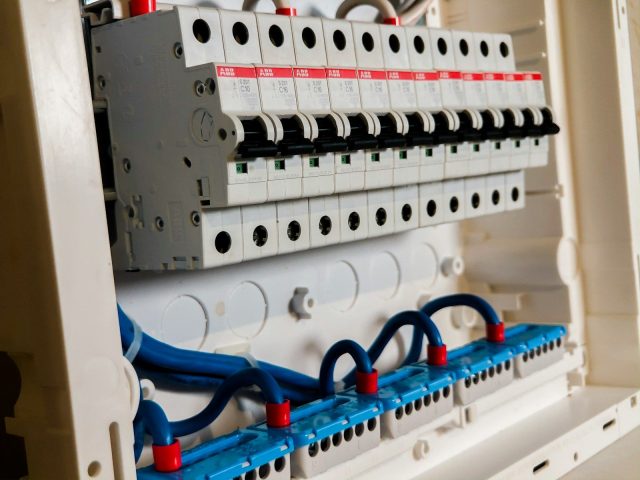
Most homeowners assume the bottleneck on a smarter, more connected home is the gadgets themselves. It’s the opposite. The smart thermostat, the induction range, the EV charger in the garage, and the mini-split in the home office all depend on something older and far less exciting: the gray metal box on the wall of your utility room.
That box was probably sized for a house that ran a fridge, a TV, some lamps, and maybe a window AC. Today’s house pulls a lot harder. If the panel behind the drywall can’t keep up, none of the shiny upgrades on top of it will work the way the marketing promised.
Your Panel Sets the Ceiling for Everything Else
An electrical panel does one job. It takes power from the utility and splits it into the circuits that feed your outlets, lights, and hard-wired appliances. Every breaker in that box is a promise about how much current a given circuit can safely carry.
Add load the panel wasn’t designed for and something has to give. Sometimes that’s a nuisance trip you reset in ten seconds. Sometimes it’s a slow, invisible problem cooking inside the walls. Industry reporting attributes roughly 24,200 residential electrical fires a year in the United States, with more than a billion dollars in property damage, and many of them start in the parts of the house no one looks at until it’s too late.
That’s the risk older panels carry. Not that the lights flicker. That the failure mode is hidden.
Signs Your Panel Is Already the Weak Link
A panel doesn’t usually announce that it’s undersized. It just makes the rest of the house behave oddly. A few tells worth paying attention to:
- Breakers that trip on routine loads. A microwave and a toaster shouldn’t fight each other. If they do, the circuit is maxed, not haunted.
- Warm cover plates. The panel door or a receptacle plate should be room temperature. Warmth means resistance, and resistance means heat you can’t see.
- Lights that dim on start-up. When the AC or a large motor kicks on and half the house dips, the service is being asked to deliver more than it comfortably can.
- Ungrounded outlets. Two-prong receptacles across the house usually mean the wiring behind them predates modern grounding requirements.
- A brand on the recall list. A few older panel brands have long histories of failed breakers. If yours is one of them, a licensed electrician will tell you plainly.
The Upgrades That Push Panels Past Their Limit
Almost every home upgrade people are buying right now is an electrical load. A heat pump swaps in for the gas furnace, and while you’re at it, the gas range gets replaced by induction. Add a Level 2 EV charger in the garage.
Then a tankless water heater. Whole-house battery backup. Each one is a great idea in isolation, and each one adds real amps.
Backup power shows how fast this shift is happening. Market analysis pegs the residential generator category at around $5.4 billion in 2025 and climbing, with homeowners moving away from essentials-only units toward whole-house coverage. A whole-house generator doesn’t just plug in. It ties into the panel through a transfer switch, and that panel has to be healthy enough to handle it.
Stack two or three of these upgrades on a 100-amp service from the 1970s and the math stops working. You don’t need a bigger thermostat. You need a bigger service.
What a Real Panel Assessment Looks Like
A good electrician doesn’t lead with a sales pitch. They start with a load calculation. They add up what the house actually draws, factor in what you’re planning to add, and compare that number against the service size the utility is feeding you.
From there, the honest recommendation is one of three things. Keep the existing panel and rebalance circuits. Swap the panel for a modern one at the same service size. Or upgrade the service itself, typically taking a 100-amp house up to 200 amps, or 400 for larger homes carrying EVs and heat pumps.
In markets with brutal summers and grid stress, the assessment often includes surge protection and a look at how the panel will interact with backup power. Homeowners in the Gulf region working with a Houston electrician who does new-home wiring and generator installs will recognize the pattern: the panel gets touched first, and the smart-home wish list gets built on top of it.
Treat the Panel as Infrastructure, Not a Fixture
The panel is boring. It doesn’t show up in listing photos. Nobody brags about theirs at a dinner party. But it decides whether the rest of the house can grow with you or whether every new upgrade turns into a workaround.
If you’re planning any meaningful home tech in the next few years, price the panel work first.