
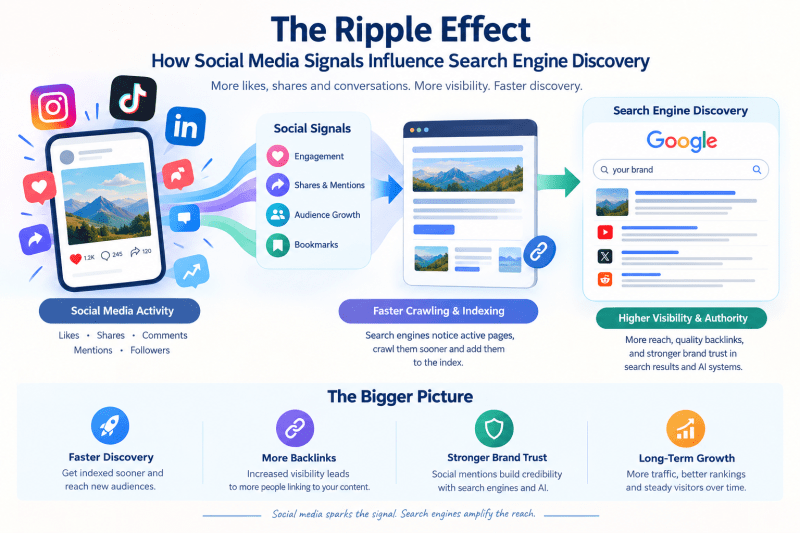
In the connected world of the internet, the link between social media and search engines has changed. In the past, Search Engine Optimization (SEO) was about things like meta tags, backlink authority, and what is on your web page. Now, search engines use audience actions on social media in real time. They look for and index new web pages, then check if they are real. When a brand gets a lot of people talking on Instagram, TikTok, or LinkedIn, it quickly makes waves on the internet.
To kick off this push, digital strategists often try to find good and fast methods to get quick action on new campaigns. If you want to see your post quickly, you can buy Instagram likes from Blastup to build early trust on social media and send fast signals that help more people find you. This can also lead to more people clicking on your site and looking up your brand online. It is important to know how modern search engines like Google and Large Language Models read these signals for long-term search results.
The Mechanism: How Social Signals Accelerate Search Engine Discovery
Social signals such as likes, sharing, and bookmarks are not used as direct ranking factors by the Google algorithm. However, there is another way through which these signals may assist you. The social signals may assist you in getting discovered quickly by Google. Your content will get more visibility as well as add trust to your web pages.
- Fast Crawling and Indexing: Web crawlers now look for pages with a lot of activity. If you have a brand name or URL that gets a lot of shares on social media, or sees more people coming in from other sites, the crawlers will notice this rise. They will then choose to index this page before quieter ones that do not get shared.
- Better Content Reach and More Backlinks: When there is a high level of social activity, more people see your content. This includes bloggers and people in your field. As more people see your posts and articles, they link to your work. These links are key for getting a better spot in search rankings.
- Brand Building and Knowledge Graph: Google’s Knowledge Graph and AI read data about people, brands, and places. When your brand gets talked about on many trusted social media sites, it helps build trust with Google. It will make your brand stronger in the eyes of search engines.
Social Signals vs. Direct Search Ranking Factors
Knowing the difference between direct ranking factors and social effects can help make multi-channel marketing better. This will let you improve your campaigns and get good results.
| Dimension | Direct Search Ranking Signals | Social Media Signals (Indirect) |
|---|---|---|
| Primary Metric | High-quality backlinks, content depth, user intent match, technical SEO. | Likes, comments, shares and social profile velocity. |
| Search Engine Role | Explicitly calculated in ranking algorithms (e.g., Google Search). | Triggers rapid crawling, referral traffic, and earned backlinks. |
| Impact on Generative AI | Provides the factual ground truth for answer synthesis. | Informs brand trust, sentiment analysis, and social citation frequency. |
| Discovery Velocity | Slow to medium (takes days to months for crawlers to rank). | Instantaneous (spikes traffic within minutes of publication). |
Optimizing for AI-Driven Search Engines
- Information Gain: Artificial intelligence systems don’t give much value to information that is repetitive or simplistic. Your work must have new information or a different viewpoint.
- Keywords & Context: Don’t use the same keywords repeatedly. Use contextual keywords such as search indexing, audience engagement on various platforms, search intent, algorithm discovery, and brand authority.
- Structured Data: Include structured data using schema markup. It will help establish relationships between your social media accounts and your primary site. This allows LLMs to trace your digital footprints in the correct way.
Today’s digital strategy needs a plan where social activity and search work together. When you match social plans with the best rules for search engines, your brand can keep growing in a strong way. This helps with being found online, building trust, and having steady long-term visitors. Good Instagram engagement is at the heart of this plan. It helps you get to more people and makes your brand visible. This early step is key to helping people find you on many sites.
Strategic Blueprint to Harness Social Signals for Search Engines
To make sure you get the most from your social media and boost your search results, you can follow this workflow in a cross-channel strategy:
- Synchronize Content Publishing: Post full articles on your website. Meanwhile, share brief and clear summaries on LinkedIn, X, YouTube, and Instagram.
- Social Media Optimization for Search: Incorporate search terms that apply to you in your social media profiles and alternative text. AI evaluates the publicly accessible feed from social media channels to detect trends and areas where you excel.
- Boost User Engagement: End your posts with open-ended questions. It will increase the number of comments. Platforms pay extra attention to active and engaging posts.
- Use Social Media Posts in Web Search Results: Videos, X posts, and Reddit discussions appear right in the search results. By using the appropriate search keywords in your posts, you can get a higher chance of visibility through the search engines.