
Modern commercial construction continually pushes the boundaries of design. Architects now rely on complex facades, intricate geometries, and striking structural elements that were once considered financially or physically impossible to build. At the heart of this rapid architectural evolution is advanced metal fabrication. No longer confined to basic industrial applications, modern sheet metalwork and precision machining have become fundamental to structural engineering. By replacing older, less reliable methods with cutting-edge techniques, this shift allows designers to realise their most ambitious projects while maintaining strict safety standards, structural integrity, and cost efficiency throughout the construction process.
Real-World Applications in Australian Construction
The Australian metal fabrication equipment market has seen massive growth, recently surpassing 800 million dollars in value and continuing to trend upward. This surge is primarily driven by continuous demand in the commercial construction and public infrastructure sectors. To accommodate large-scale facades, local fabrication shops utilise high-capacity equipment, like CNC brake presses and heavy-duty guillotines, capable of cleanly shaping sheet metal up to four metres in length. Government initiatives across various Australian states, including manufacturing modernisation grants, have further accelerated the adoption of automated fibre lasers and CNC routers in regional facilities.
To deliver these complex architectural requirements, builders rely heavily on established local expertise. For instance, Di Metal Design operates out of Victoria and brings over four decades of specialised experience to the market, manufacturing everything from heavy structural components to highly detailed architectural screens. Working with experienced local fabricators ensures that strict domestic building codes are met while reducing the logistical delays associated with importing heavy materials from overseas markets, keeping projects on schedule and within budget constraints.
The integration of advanced fabrication in modern commercial projects typically includes several specific applications:
- Custom Architectural Screens: Precision laser-cut metal facades that provide both unique aesthetic appeal and functional environmental shading for large commercial buildings.
- Structural Support Systems: High-strength brackets, custom cleats, and connecting plates machined to exact tolerances for seamless integration into primary structural frames.
- Precision Bending and Forming: AI-assisted press brakes that execute complex, multi-angle bends flawlessly on the first attempt, which reduces material waste and lowers physical risks to workers.
The Shift Towards Digital Precision and Automation
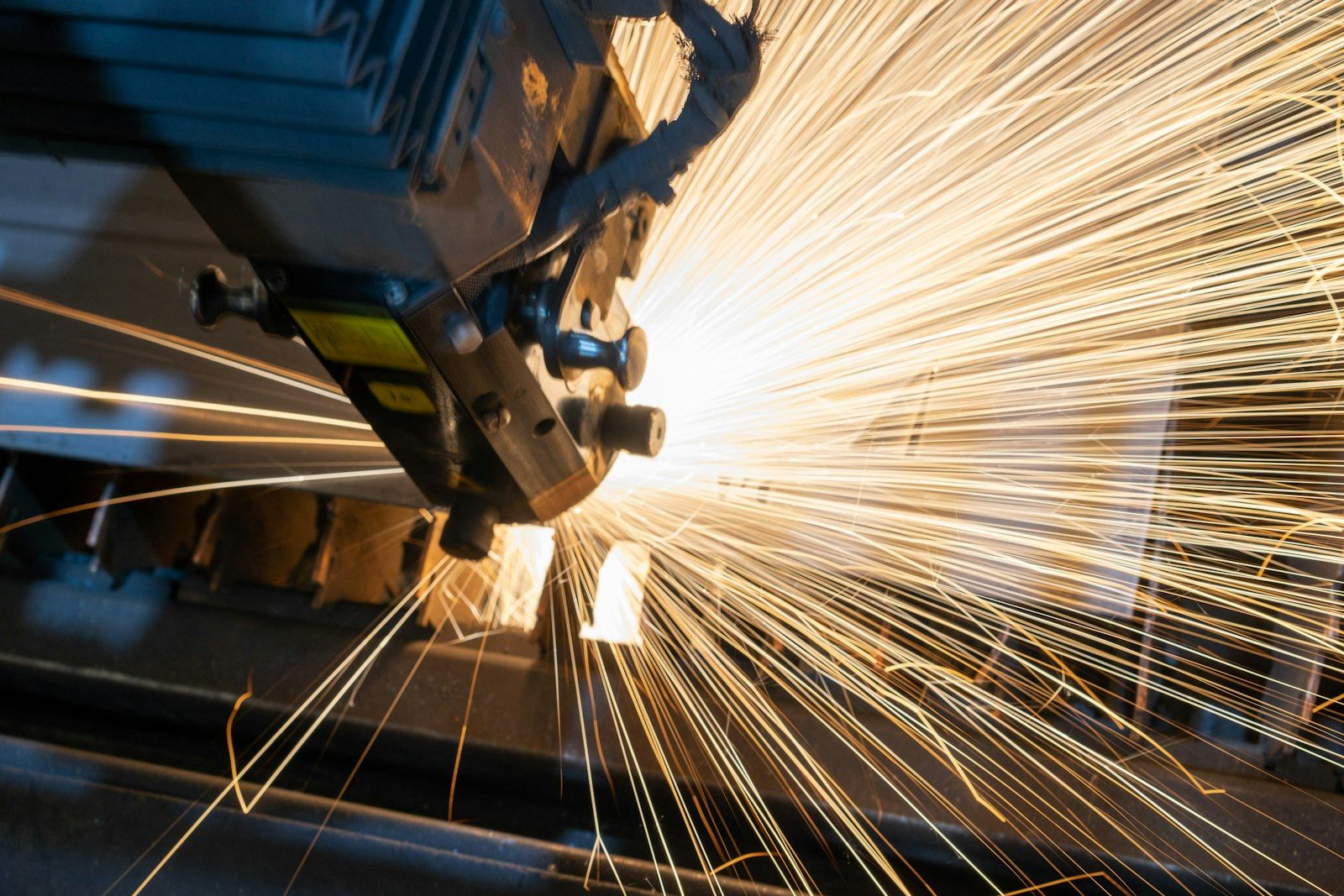
The days of manual measuring and cutting in large-scale commercial metalwork are largely behind us. Today, architectural engineering relies heavily on automated systems, such as 5-axis CNC machining and modern fibre laser cutting technology. These advanced systems have evolved to the point where they can consistently achieve dimensional tolerances of plus or minus 0.01 millimetres. This level of exactness virtually eliminates edge distortion on heavy structural plates, a factor that is absolutely crucial for large commercial builds where even minor deviations can cause massive project delays and significantly inflate construction costs.
The integration of Building Information Modelling (BIM) with automated CNC machinery has also revolutionised the workflow. Engineers can now send digital schematics directly to the fabrication floor, eliminating manual translation errors and substantially reducing scrap materials generated during the early stages of a build. Strict adherence to these exact specifications is not just about aesthetics. Industry standards demand absolute precision because accurate measurements are foundational to safety and consistency in industrial settings, ensuring that complex architectural assemblies fit together without structural flaws.
Sustainability and Material Efficiency
Beyond design flexibility and structural safety, modern metal fabrication plays a critical role in sustainable building practices. In Australia, the Green Building Council of Australia oversees the Green Star rating system. This program awards crucial sustainability credits to construction projects that utilise efficiently fabricated, low-emission materials. Additionally, the Steel Sustainability Australia Certification Program evaluates downstream metal fabricators to ensure their processes meet the strict environmental guidelines required by modern green building frameworks.
Automated nested cutting algorithms mathematically arrange component layouts on a single metal sheet. This highly efficient process maximises material yield and drastically reduces offcut waste. Upgrading to high-efficiency fibre lasers also significantly lowers the electrical power required for cutting thick metals when compared to older plasma or thermal cutting methods. The broader environmental impact of these digital processes is substantial. According to the U.S. Department of Energy, advanced computer-driven manufacturing techniques can cut material waste by up to 90 percent and lower energy usage when compared to traditional, subtractive industrial methods.
As architectural engineering continues to evolve at a rapid pace, the partnership between visionary designers and advanced metal fabricators will only grow stronger. By combining digital precision, automated machinery, and sustainable material practices, the engineering industry is well-equipped to construct the intricate, efficient, and resilient commercial buildings of the future.